

Disclaimer: None of this was written by generative artificial intelligence (GenAI). (Shocking, right?)
With the rising (and well-justified) use of GenAI for product and brand content, ecommerce transactions, customer service interactions, security, and data management, it might very well become the norm to disclaim when artificial intelligence isn’t being used rather than the opposite.
GenAI is artificial intelligence that can generate text, images, video, or other data. It's powerful and handy (when you use it right). Here’s how to use generative AI in ecommerce as a tool and maintain what makes your brand unique.
Why Is Generative AI a Big Deal?
Generative AI is a big deal because it's iterative — it's always learning, adapting, and improving — as long as the data it's feeding off of is high-quality.
Ecommerce professionals and everyday shoppers alike are finding more uses almost daily: It's not just an ecommerce trend that showed up one day and is gone tomorrow.
Its technology is so powerful that it simply can’t be ignored — and your brand can't afford to fall behind the new three-shelf reality (physical, digital, and agentic). However, AI's power didn’t manifest out of thin air.
Though AI can teach itself, it didn’t create itself. Its human creators are still responsible for responsible application and monitoring.
You and your teams must be in the loop to apply it effectively.
According to ecommerce experts, generative AI is best suited for:
- Automating simple, high-volume tasks;
- Fixing data problems, not necessarily “hard” or creative ones;
- Improving personalization experiences; and
- Assisting with regulatory compliance.
Brands leading the pack are the ones using generative AI in ecommerce because, through these functions, it's saving them time and cutting costs.
How Is Generative AI Used in Retail?
Generative AI is increasingly used in retail in both simpler and more innovative ways. It can improve product detail pages (PDPs), cater to customers, and overhaul inventory management.
Generative AI Powers and Perfects PDPs for Human Shoppers and Agents
Though daily online shopping (15%) is down from 2025 (21%) according to Salsify's "2026 Consumer Research" report, that's still a lot of potential eyes on your products and pages.
Whether you have a catalog of 10 products or 10,000, and whether you push to just a few channels or too many to count, that’s a lot of room for error.
Consumers are easily turned off by incorrect or inconsistent product content, per Salsify consumer research:
- 34% of shoppers will abandon a sale due to incomplete or poorly written product titles or descriptions; and
- 38% of shoppers (including 45% of Gen Zers and 43% of millennials) will abandon a sale due to inconsistent product information across websites.
Sure, that's not everyone. But if you're also hoping to achieve answer engine optimization (AEO) and have your product listings show up in answer engines like ChatGPT, Claude, or Google Gemini, imperfect or incomplete content simply won't be recommended.
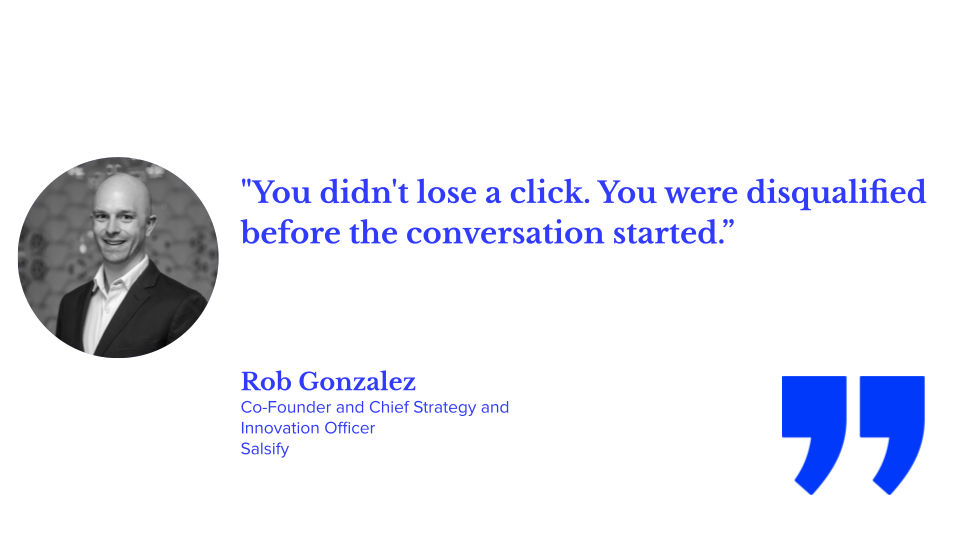
In a post for CustomerThink on the three shelves (and the particularity of AI crawlers), Rob Gonzalez, Salsify co-founder and chief strategy and innovation officer, shared: "You didn't lose a click. You were disqualified before the conversation started.”
Though that might sound bleak, GenAI in ecommerce leaves room for wins. For example, it can help turn alt text creation (a must-have for agents crawling your pages) from a manual process to an automated one.
GenAI can also be used to create product images, especially seasonal updates, and AI writing assistants can help localize or translate product listings. These capabilities leave your team with more time for creativity, brand curation, or tackling more complex issues.
Sure, no tool can go totally unchecked, but automation is abundant, as some tools can even ensure you automatically meet the ever-changing requirements of your retail partners.
With appropriate coaching and parameters from your teams, AI can check these tens, hundreds, or thousands of characters, images, and data points for discrepancies, improving your overall reputation with human shoppers and agents.
Generative AI Can Liaise With Customers
Shoppers are warming up to GenAI as a means of connecting with their favorite brands, even allowing them to make purchase recommendations.
Twenty-two percent of shoppers purchased a product because it was recommended by an AI shopping assistant or chatbot, per Salsify's 2026 consumer research, up from 17% the previous year.
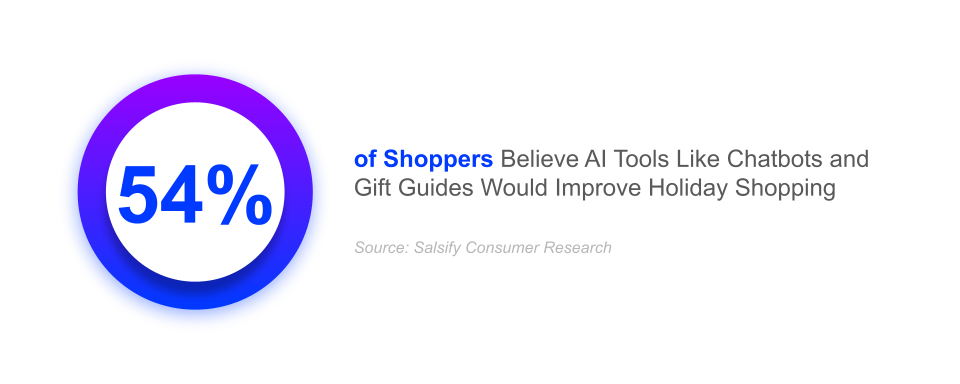
Furthermore, a whopping 54% of shoppers believe AI tools like chatbots and gift guides would improve holiday shopping, according to Salsify's "2026 Holiday Pulse Report."
This leaves an opportunity for brands to consider how their AI strategy caters to different demographics and, perhaps, an even bigger question for AI developers.
Frequently checking and updating your internal data and protocol for chatbots, for example, can help alleviate any discrepancies or hallucinations. Also, ensuring your chatbot's dialogue maintains your brand voice makes for better customer nurturing.
AI Innovates Inventory Management
Inventory management tools equipped with AI can help you better track what’s in stock, what’s selling, and what you should potentially sell in the future through sentiment analysis from surveys, social media, or search data.
Stockouts turn consumers off, too. When it comes to PDP content, 84% of shoppers find pricing and availability “extremely” or “very” important when deciding to complete a purchase.
Keeping inventory data up-to-date with AI or leveraging it to suggest similar products — if items go out of stock — can alleviate headaches for your team and customers. AI may even be able to reduce returns by offering live advice (i.e., Amazon’s Rufus) for curious customers to make better purchase decisions the first time.
What Opportunities Does Generative AI Offer for Ecommerce?
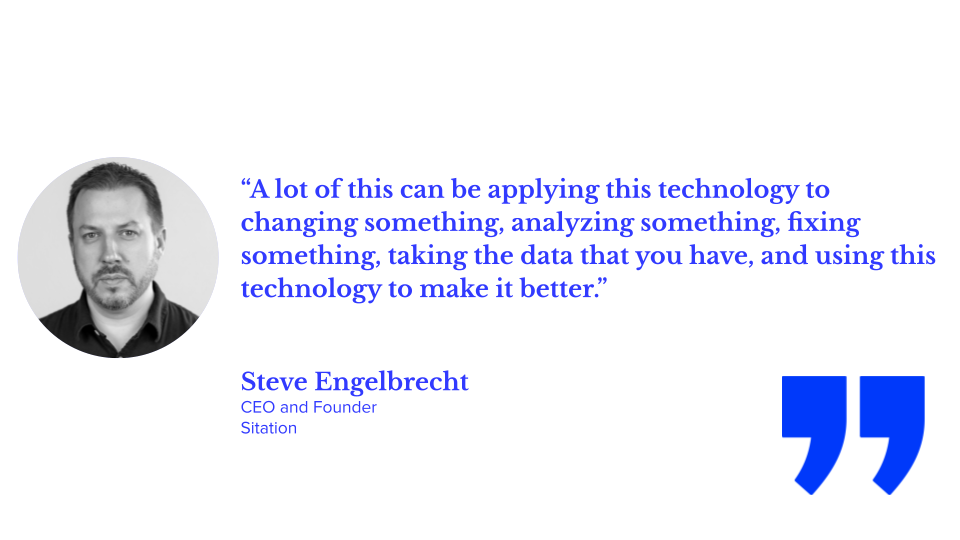
Generative AI also does not strictly mean the generation of something new, CEO and founder of Sitation, Steve Engelbrecht shared in a webinar on creating a winning ecommerce strategy with AI: “A lot of this can be applying this technology to changing something, analyzing something, fixing something, taking the data that you have, and using this technology to make it better.”
So, naturally, there are still further opportunities that GenAI offers for ecommerce.
Further Bridging the Gap Between Digital and Physical Shopping
There will always be (some) discrepancies between the experience of shopping online and shopping in a physical store. But shoppers crave crossover between the two, aka “phygital” shopping.
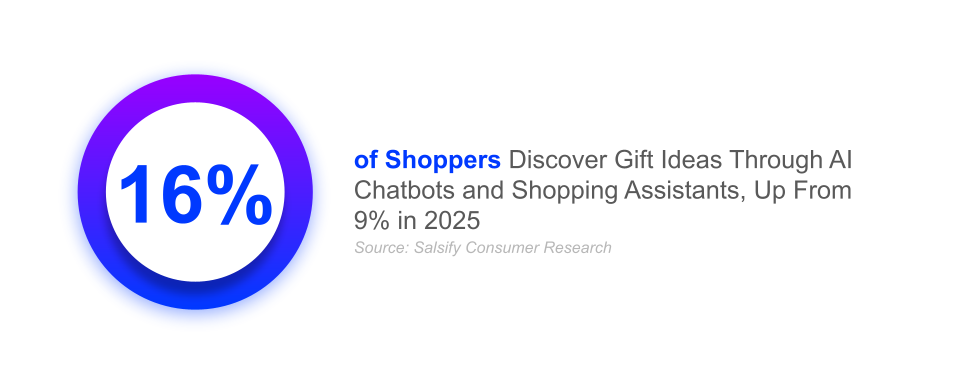
They expect brands to show up consistently, no matter what channel they’re interacting on, but consumers are also increasingly enthusiastic about AI technology, even in the context of scoping holiday gifts. According to Salsify's latest holiday consumer research, 16% of shoppers use AI chatbots and shopping assistants like ChatGPT to discover holiday gift ideas, nearly double that of 2025 data.
Another way AI can make digital and agentic experiences feel more real: virtual reality and view-in-room tools. Consumers can view furniture to scale in their spaces or try out the latest shade of L’Oréal lipstick.
As you roll it out on your PDPs, consider how to help your consumers warm up to it by sharing content of your employees using it or UGC from your tech-savvy fans.
Generative AI in Ecommerce: It’s Personal
Generative AI in ecommerce is used to personalize shopping experiences. Pattern recognition? Figuring out and remembering consumer likes and dislikes? Choosing tailored product recommendations? Knowing which samples to include in shipments to nurture existing customers? AI’s already got that on lock.
Agentic commerce is taking generative AI capabilities a step further. Shoppers can now converse with agents and ask, in vivid detail, exactly what kind of products they're looking for as well as describe their unique needs and preferences.
This makes perfecting structured data like specs and alt text crucial, as well as unstructured data — additional context, FAQs, reviews, and so on — to be AI-visible, answer increasingly specific queries, and be chosen for the AI recommendation. This is the gist of generative engine optimization (GEO) and AEO.
According to Salsify's "2026 Holiday Pulse Report," 51% of shoppers are comfortable with agentic commerce, or an AI shopping agent automatically discovering, researching, and purchasing gifts. And, according to analysis by Adobe, AI-referred retail traffic is up 393% year over year (YoY), and AI traffic sources have 42% higher conversion rates than non-AI traffic.
This is something to consider for your own product content: Do you have your content on your PDPs describing your brand and products as if you were talking to a friend? Or is the language more robotic? Do you include detailed FAQs and Q&As to model conversational queries and interfaces?
Generative AI Helps You Develop Code, Products
According to Deloitte, 70% of developers say GenAI tools give them an advantage, from better code quality to faster completion.
AI assistants that are natively built into product experience management (PXM) tools, like Salsify's Angie, for example, can help you map channels, analyze and optimize code, and write and format formulas all within the context of your brand's ecosystem.
Dreaming up the next in-demand product is becoming more of a reality with AI. Companies like The Coca-Cola Company, fashion brand FINESSE, and Estée Lauder have already been using generative AI in their product development.
McKinsey & Company considers GenAI to still be in its infancy, but “when used properly throughout the product development life cycle, we sometimes see a reduction of up to 70% in product development cycle times.”
Generative AI in Ecommerce: Life Is Better With Bots
Always learning: Humans and AI will always have this in common. Applying generative AI in ecommerce to your organization will likely require testing, checks and balances, resets, and candid conversations about what your brand wants to accomplish and how (all without losing what makes your brand unique).
But there’s no doubt that it's best to involve the bots when it comes to boosting operational efficiency, improving data quality, and dreaming up the next in-demand product.

WEBINAR SERIES: The AI Path to Purchase
There are now three shelves to master: the physical shelf, the digital shelf, and the agentic shelf — and success requires SEO, GEO, and AEO. Learn how to tackle it all in this webinar series from Salsify and DetailPage.
WATCH NOW.svg)
