


Today, ecommerce workflows power experiences across the digital shelf, from direct-to-consumer (D2C) channels and marketplaces to retailer sites, social commerce, and now, agentic commerce.
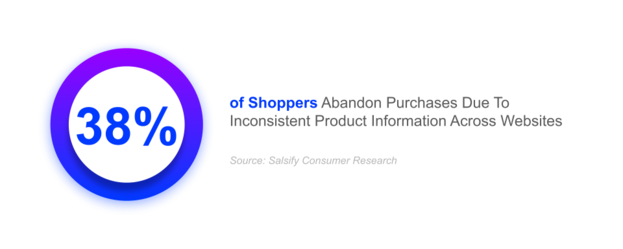
The buyer journey has become increasingly complex, and when there’s too much friction, consumers jump ship: 38% of consumers said they’ve abandoned a sale because of inconsistent product information across websites, according to Salsify’s “2026 Consumer Research” report.
In 2026, the best ecommerce workflows must be flexible, adaptable, and AI-ready. Here’s how brands can modernize their workflows to drive ecommerce transformation as AI increasingly becomes a part of the path to purchase.
What Is an Ecommerce Workflow?
An ecommerce workflow is a repeatable process to get product content and product experiences to market, from collecting and enriching content all the way through validating, publishing, and updating it across channels.
Ecommerce workflows connect people, systems, product data, and AI tools to help brands meet retailer requirements, ensure product accuracy, and give consumers the information they need to make informed buying decisions.
The old model for ecommerce workflows involved linear handoffs and static checklists. But the new model anchors on dynamic, event-driven, AI-automated workflows that always have a human in the loop.
Adapting Ecommerce Workflows for the AI Age
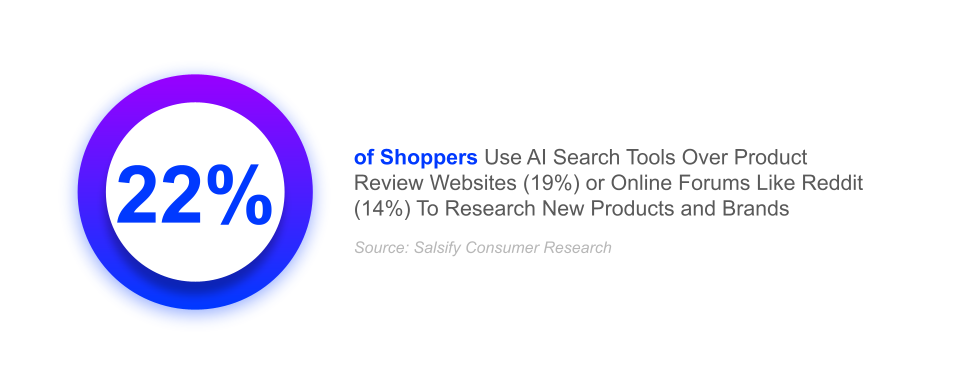
AI is increasingly embedded into the shopping experience: 22% of consumers use AI search tools to research new products and brands, and 27% say they trust AI shopping recommendations but also verify these recommendations with other sources, according to Salsify’s consumer research.
As consumer behavior shifts, ecommerce teams have to navigate more complexity, which often translates into faster launches, more frequent content updates, and product refreshes.
It also means turning product data into buyer-ready, answer engine-optimized (AEO) content that helps their brand gain visibility in AI search engines like ChatGPT and Gemini that consumers increasingly use.
“SEO is dropping for a lot of companies, and consumers are leveraging GPTs for discovery,” says Natalija Pavic, senior director, product marketing at KIBO Commerce. “So you really have to start thinking about AEO, or agent engine optimization, as opposed to SEO. That may potentially overtake SEO as the dominant way in which shoppers consume information on your site.”
“You're not competing against other retailers; you're competing against the generative providers who are already owning that customer relationship,” she adds.
As AI adoption grows, it’s contributing to more content velocity and transforming the entire product content lifecycle and ecommerce workflows. In 2025, brands using Salsify’s Product Experience Management Platform (PXM) automated over 768 million workflow tasks, a 50% increase year-over-year, and published more than 5 billion products across the global commerce ecosystem, representing 46% growth.
These figures show how AI and automation have become essential for delivering and scaling modern product experiences.
The Best Ecommerce Workflow Has 5 Core Characteristics
In the age of AI-powered shopping and agentic commerce, the best ecommerce workflow incorporates a combination of tried-and-true digital shelf best practices and new processes designed to create AI-ready product content.
Here are the five core characteristics of modern, effective ecommerce workflow:
#1: Creates a System of Accountability
A good ecommerce workflow makes who owns and is involved in deploying product content explicit:
- Who creates it
- Who reviews it
- Who approves it
- Who monitors it
- Who updates it
It also assigns responsibilities to specific roles and teams, not just specific team members. In 2026, this workflow also must:
- Decide when human review is necessary and where to integrate it at different touchpoints
- Determine who reviews and approves AI-generated or modified content
- What happens when this content contains errors and how teams will correct them
“You still need to have human intervention,” says Pam Perino, digital content operations and development manager at Ghirardelli. “It’s a machine. It’s not perfect. It’s not going to be perfect.”
#2: Is Built for Change
The best ecommerce workflow also must be flexible and adaptable.
It should adjust as:
- Retailer requirements change
- Product information changes
- Consumer behavior shifts
- New AI tools become available
- New channels emerge
AI and automation make brands more nimble in this environment. However, the key for companies is to determine which parts of their existing ecommerce workflow to automate, which parts they need to rebuild for the AI era, and where human judgement and oversight will sit along this spectrum.
#3: Uses AI and Automation Where It Adds Value
Responsible AI use in ecommerce means teams shouldn’t automate everything. They instead must understand when and where to use AI strategically to scale product experiences.
AI often generates the highest ROI with repeatable tasks such as:
- Data classification and categorization
- Content enrichment or repurposing
- Status updates and task ownership
- Approval routing
- Detecting anomalies or surfacing inconsistencies
This approach allows teams to focus on higher-level work that requires their unique skills and industry knowledge, while AI handles repetitive tasks and makes various processes more transparent and efficient.
#4: Supports Better Collaboration
Marketing, ecommerce, product, brand, IT teams, and more internal and external stakeholders now have to collaborate to get product experiences live.
They need a shared view of product data to appropriately manage, activate, and govern it across its lifecycle. This is why teams need a PXM that acts as a central source of truth for their work and powers modern workflows that:
- Minimize manual hand-offs that potentially lead to errors
- Reduce duplicate work that slows time to market
- Centralize context so teams can work smarter
- Power content syndication to get products to shoppers’ preferred channels
The best ecommerce workflows center collaboration and make it easier, helping teams get relevant product experiences to the digital and agentic shelf faster.
#5: Validates Quality for Human Buyers and AI Systems
More automation also requires better governance.
The best ecommerce workflows deliver quality content that isn’t just complete, but also accurate, consistent, meets retailers’ evolving requirements, and is both human-readable and machine-readable.
The latter is critical as we enter the era of agentic commerce, where shoppers use AI assistants to discover and research products and complete transactions on their behalf.
Brands must not only make their products discoverable to AI systems, but they must ensure these systems understand who they are, what they do, and why they’re different from competitors.
That means a human must always be in the loop to ensure your company makes clear and credible claims across channels and that your product content actually reflects the attributes of your products.
“Always review what comes out,” says Rebekka Meyers, director of content and creative at UMA Home Decor. “Don’t assume what comes out will be 100% correct and that you can put it directly on your site.”
To win on the agentic shelf:
- Product content must be well structured. Clear headers and useful product attributes and descriptions should make product value clear to humans and AI.
- Information must be consistent across channels. Information on a brand’s D2C site shouldn’t conflict with what’s on a retailer’s site or marketplace platform.
- Updates must reach every channel quickly. To reflect the current truth about a product, from pricing and availability to its specifications.
All of these things require human oversight and effective change management to ensure data, processes, and workflows all align to create AI-ready product experiences.
A Roadmap for Building Better Ecommerce Workflows
As your team modernizes its ecommerce workflows for traditional and agentic commerce channels, here’s a framework that can help with the transition:
- Map your current workflows and processes: Identify opportunities to reduce manual work and streamline hand-offs.
- Define the business outcome: Is your goal faster product launches? Higher content quality? Fewer errors? Once you define the outcome, you can structure your ecommerce workflows to achieve it.
- Decide what your team owns: Establish what teams or individuals own which part of the product content process.
- Decide what AI owns: Identify when, where, and how you will incorporate AI.
- Automate, but not everything: Let AI take care of high-volume, repeatable tasks, while your team handles the work that requires strategic thinking.
- Validate and govern: AI automates, but you approve. Human review must always be the last line of defense for the best ecommerce workflows.
- Measure what works and improve it: Don’t treat your ecommerce workflows as static processes, but rather living systems that flex and adapt to a changing ecommerce environment and shifting consumer behavior.


Mastering the Agentic Shelf: A PXM Playbook for AI-Fueled Growth
Your brand is either the recommendation the machine trusts — or it’s invisible. Learn how to navigate the new three-shelf reality (physical, digital, and agentic).
DOWNLOAD NOW
