

A run to the pet store used to be relatively straightforward: chow for the dog, litter for the cat, and maybe a bag of treats if Fido managed to keep it together on the car ride.
But as pets have become increasingly integrated into family life, owners have started shopping for them with many of the same health and wellness concerns they bring to their own diets. Now, even a basic food run can involve questions about digestion, weight, activity level, sensitivities, life stage, and other functional health benefits.
While that shift pushed the pet nutrition market toward more personalized choices and experiences, it also introduced newfound complications to the petcare shopping journey.
A pet parent trying to find the right food for an older dog or a cat with a sensitive stomach may need more than a package label to make the call. In fact, they may end up comparing products across a number of different channels before feeling confident enough to buy.
And make no mistake — that’s a big deal for petcare brands. The more complex the decision becomes, the more useful and consistent product information has to be across channels. Otherwise, your customers may start looking for a brand that demonstrates it and better understands their pet’s unique challenges and needs.
Here are some clues on how to best support pet parents on their petcare shopping journey.
Pet Parents Want Confidence — Not More Guesswork
Consumer appetite for more individualized pet care is already well-reflected in consumer opinion polling.
In a 2026 Yummypets survey of nearly 2,200 dog and cat owners across six countries, almost two-thirds said they were interested in personalized diets for their pets. Interest was even higher among younger owners, with 75% saying they were interested or very interested. Better health and well-being ranked among the biggest reasons why.
Well-known petcare brand Purina offers a pet food finder quiz to help make searches more enjoyable.
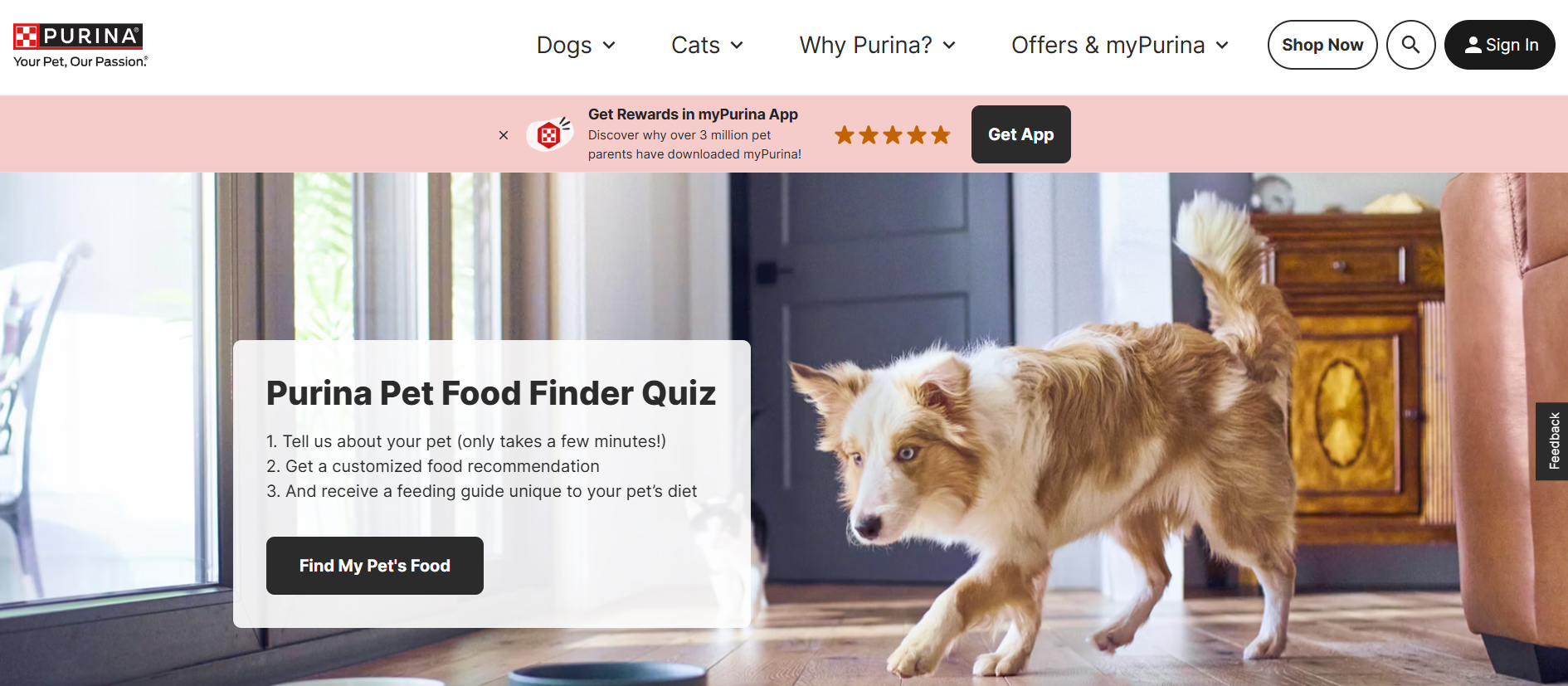
Image Source: Purina
However, some shoppers might not want to be limited to brands that offer quizzes. An increase in highly specialized choices can also lead to a different kind of problem: uncertainty. NielsenIQ reports that 81% of pet owners find understanding their pet’s health status or needs challenging. And that can become a bigger problem as shoppers encounter products tailored to specific health concerns.
That’s a tricky dynamic for brands. Consumers are asking for more individualized options at the same time they’re struggling to make sense of them. The solution here isn’t simply to expand the assortment, but to make it easier for pet parents to understand which products actually fit their pet.
Families With Pets Don’t Shop in Just One Place Anymore
Omnichannel shopping is now the default in petcare, especially among the category’s most valuable customers.
NielsenIQ reports that nearly 70% of petcare shoppers now buy both online and in-store, accounting for 87% of category spending. By comparison, shoppers who stick exclusively to stores account for about 9% of dollars, while online-only shoppers represent about a third of that.
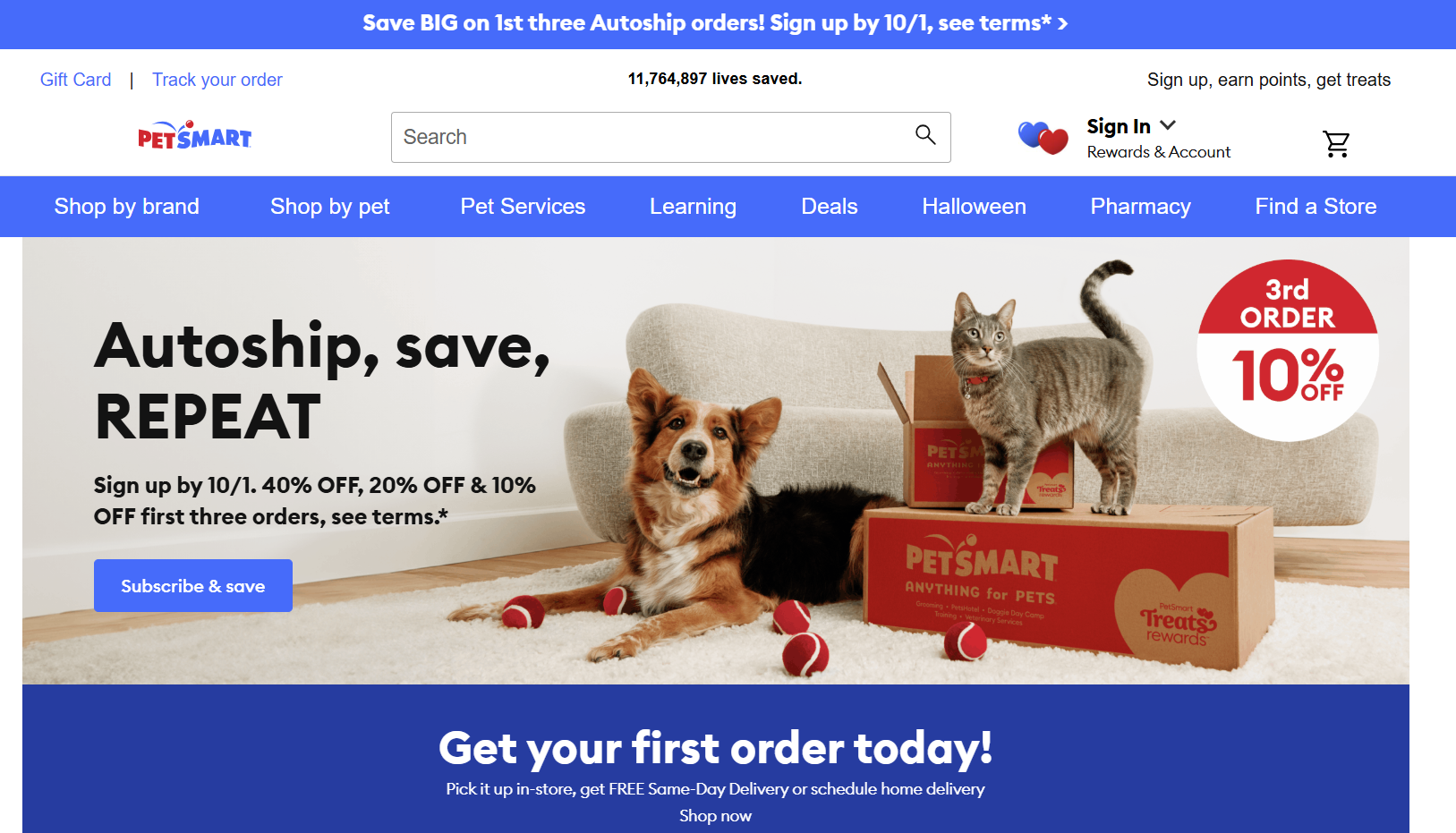
Image Source: PetSmart
The opportunity, then, is to make digital product content provide more of the context shoppers may otherwise seek elsewhere. That puts more pressure on the product detail page (PDP) to do more than reproduce what’s on the package. It needs to give shoppers enough information and reassurance to understand whether a product actually fits the need they’re shopping for.
PDPs — Turning Product Data Into ‘Pawsitive’ Reassurance
By the time a shopper reaches a PDP, the question is often less “What is this?” than “Is this actually right for my pet?”
As a result, a PDP needs to do more than repeat what’s already on the package. Ingredients, claims, and specifications all matter, but shoppers also need enough context to understand why those details are relevant to the decision they’re trying to make. The goal is to make product information easier to interpret, not just easier to find. Instead of simply listing an attribute or benefit, give shoppers enough context to understand what it means and why it matters for the pet they’re shopping for.
This example from Petco discusses a high-protein food formula that “tends to your dog’s sensitive skin and stomach” and “supports healthy joints and mobility.”
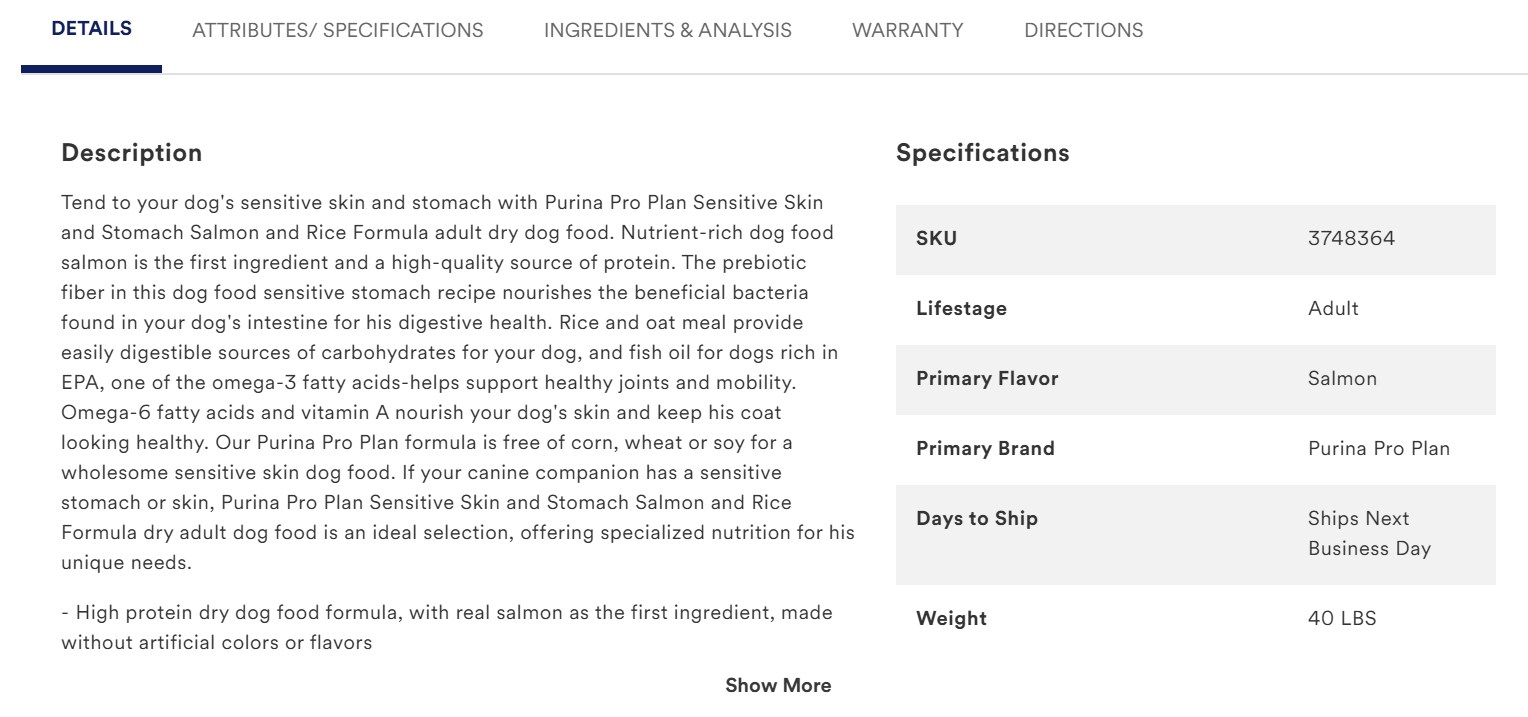
Image Source: Petco
That context matters because inconsistency can kill confidence — fast.
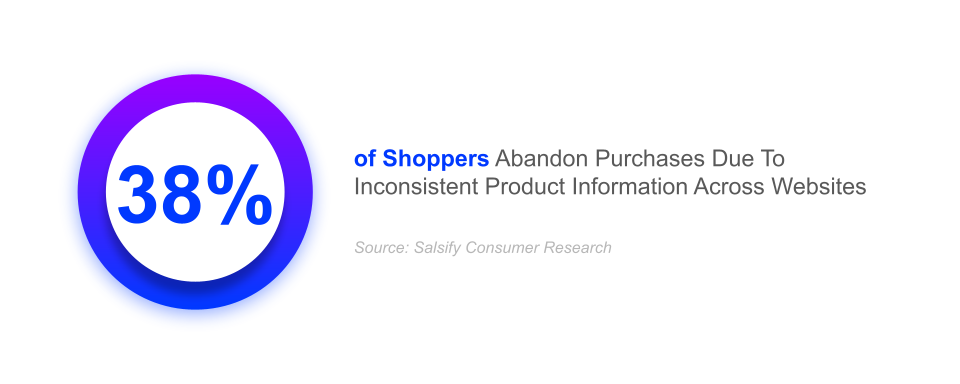
For example, Salsify’s annual consumer study found that 38% of shoppers have abandoned a purchase because product information differed across websites.
In a category where people are already doing more homework, a thin or contradictory PDP can create more questions instead of answering them.
Another point worth noting: The same work you’re doing to make product information clearer for shoppers can also make that content more useful to AI-powered shopping tools. These systems still depend on the underlying product data to understand what an item is, what makes it different, and when it may be relevant to a particular query.
Better Product Content Makes Pet Wellness Decisions Easier
Pet parents have more options than ever — but more choice only helps when shoppers can understand what actually fits their pet. As wellness becomes more individualized and research stretches across channels, clear product information becomes part of the experience, not just something you fill in before publishing a PDP.
If your content still leaves shoppers piecing together answers on their own, there’s room to make the product experience more useful, more consistent, and easier to trust.

WEBINAR: AI in Salsify: A Practical Playbook for Agentic Commerce Readiness
To learn more about preparing your product content for the impending agentic AI shift, check out the full on-demand webinar.
WATCH NOW.svg)
