

As we head into 2027, household spending data points to where brand manufacturers need to double down to win on both the digital and agentic shelf.
Who controls household spending isn’t the same as who influences it. With AI-powered shopping in the mix, brands now need an adaptable, multi-faceted strategy to attract, convert, and retain customers.
Here’s what the data tells us about who holds the wallet, who shapes what goes into the cart, and how brands can use AI to power future commerce experiences.
Where the Market Is Today
Several headwinds are currently shaping consumer buying behavior.
Price increases and lingering inflation are making consumers more price-conscious and cautious about where, when, and how much they spend. U.S. consumer prices rose 3.7% year over year in September 2026, according to Bureau of Labor Statistics data.
Data from the U.S. Bureau of Labor Statistics also shows income is flattening while prices rise. At the same time, household spending is increasing. That’s likely not because consumers have more disposable income, but because a single dollar doesn’t stretch as far as it used to.
Consumer confidence has also declined for the first time since September 2024, according to a Conference Board survey. Consumers are less optimistic about current business and labor market conditions. Respondents cited the high cost of goods and services, and oil and gas prices as the main factors reducing their confidence.
Taken together, Deloitte says brands now have to market themselves to a more value-seeking consumer who is prioritizing discounts, rewards, and private labels to spend smarter this year and next, especially as we approach the holiday shopping season.
Who Controls Spending?
In a more price-sensitive environment, household spending control remains largely unchanged.
Today, CFP Board reports that 69% of women say they are the primary financial decision-maker in their households. Experts at Nielsen Sports and PepsiCo expect this number to grow, forecasting that women will control 75% of household spending by 2028.
Gen X, regardless of gender, also has significant spending power. This group, most of whom are in their late 40s and 50s, spends more than any other generation — to the tune of $15.2 trillion in global spending last year, per NIQ.
They’re called the “caretaker consumers” because they’re part of the sandwich generation, caring for aging parents and their children at the same time. Because of these multi-generational financial considerations, Gen X will remain the biggest spenders across generations through 2033, according to NIQ.
Who Controls the Cart?
While women and Gen Xers control the purse strings, younger consumers in their household greatly influence where that money goes.
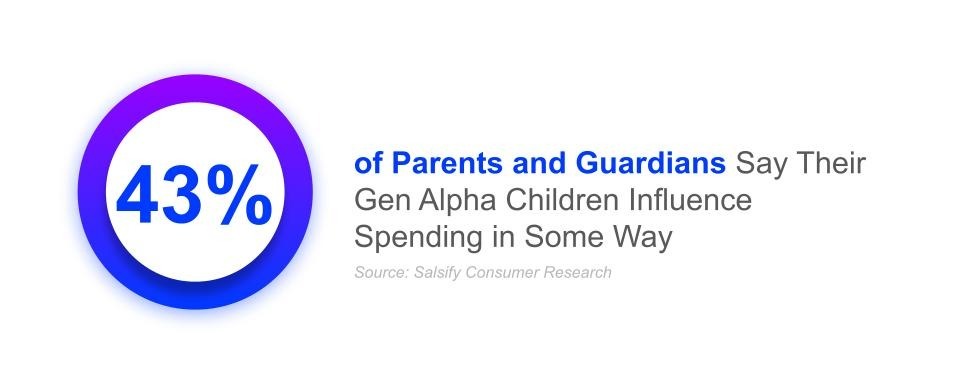
For all the focus on Gen Z, Gen Alpha shapes spending in a major way. In Salsify’s “2026 Consumer Research” report, 43% of parents say their Gen Alpha kids (ages 1-15) influence household spending.
Their influence is widespread across categories such as food and beverage, fashion and apparel, and electronics. They aren’t just forcing their parents to buy toys, video games, or sugary cereal.
Interestingly, people outside the home influence consumers’ household spending, too. Recommendations from family and friends shape product discovery, and so does social media.
Family and friend recommendations and social media sites such as TikTok and Instagram land in the top five discovery channels for consumers across all generations, the report also found, ranking just behind brick-and-mortar stores and online marketplaces.
This signals that trust still plays a big role in purchasing decisions, but visibility still matters on the social channels consumers frequent.
The AI Effect: Entering the Era of Agentic Commerce
Google isn’t going anywhere (yet), but consumers are increasingly turning to AI search engines like ChatGPT, Gemini, and Claude to help them research and discover products.
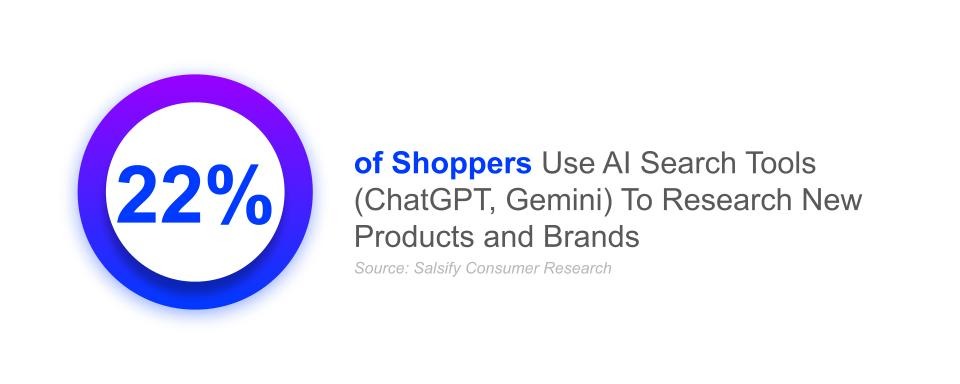
Nineteen percent of consumers discover products through AI search tools, and 22% use the same tools to research products, Salsify’s “2026 Consumer Research” report found.
While consumers use AI to inform their purchasing process, they don’t entirely trust it. Salsify’s research shows that 3 in 10 shoppers trust AI product recommendations when there are detailed product descriptions and specifications, and brand recognition.
Twenty-five percent of shoppers say a personalized explanation of a product’s value and customer reviews or ratings persuade them to trust AI recommendations, according to Salsify.
From this perspective, AI is more of a conduit of information than a buying destination. Still, brands need to integrate this channel into their commerce strategy and optimize for AI visibility going forward.
6 Strategic Takeaways for Brands
1. Focus on Women’s Influence
Women still control most of the household spending, making them a prime target for ecommerce brands.
But brands shouldn’t just target them with surface-level messaging or ad creatives drenched in pink and fuchsia. You need to speak directly to their needs, values, and preferences as individuals and as the primary household decision-maker without relying on stereotypes or assumptions. That also means leaning into the zeitgeist a bit while still being authentic to your brand (insert ads about the mental load, women’s sports, and the softlife era here).
Social media and AI listening are the perfect tactics to support this strategy and can help boost your brand’s relevance, naturally showing why it’s worth it for consumers to buy from you long term.
2. Target “Caretaker Consumers”
Brands need to connect with Gen Xers from two perspectives: showcasing products that speak to their personal needs and those that speak to their overlapping responsibilities as members of the Sandwich Generation. This group is essentially making purchasing decisions for three generations — themselves, their aging parents, and their Gen Z or Alpha children.
Brands should make Gen Xers feel seen with product content that shows they understand the unique challenges they face and how their products can support things like wellness, household organization, planning, and more.
3. Lead with Value
Consumers want more value for their money. Brands should lean into promotions, discounts, flash sales, product bundles, and social commerce sites like TikTok Shop to engage consumers with these offers. As consumers deal with rising prices, giving them a way to spread out product costs, such as buy now, pay later options, can also be valuable.
In your product content, your brand should also highlight product quality and durability. Value isn’t just about cost. Some consumers, especially those at higher income levels, may feel more compelled to spend when it’s clear they’re getting great quality at a fair price.
4. Realize that Gen Alpha Is Coming
Gen Alpha may only be 1 to 15 years old, but they’re influencing what products land in the shopping cart.
For the oldest part of this cohort, brands need to meet them where they are. TikTok (41% of Gen Alpha kids are on the platform), Roblox (51%), and YouTube Kids (78%) are their current preferred online destinations. If you’re not currently creating organic, short-form content on these channels, repurposing user-generated content, or increasing your TikTok Shop presence, now’s the time to start.
5. Enhance Personalization
In a sea of AI-generated content, consumers appreciate when brands speak to them personally. In one recent consumer survey, 93% of respondents said they wanted brand communications to feel more human. Quite simply, they want to hear from a real person — not an AI bot.
That doesn’t necessarily mean 1-1 messaging, but content that is relevant to them, their needs, and their stage within the buying journey. This is where pairing first-party data with data from marketplace and retail media platforms can strengthen understanding of key audiences.
Use these insights to tailor your messaging in segmented newsletters, ads, and personalized email marketing campaigns that attract your ideal buyers.
6. Prepare for the Agentic Shelf
Your brand now has to ensure its product content is both machine-readable and human-readable.
AI search engines are already crawling the web to inform the answers they give users. Now, we’re inching closer to a future where consumers will deploy AI agents to perform various shopping activities on their behalf.
You must optimize your product content processes for the AI age to ensure content accuracy, timeliness, and relevance.
This starts and ends with product data, so focus on strengthening data governance, identifying bottlenecks in your current digital shelf processes, and finding ways to responsibly use AI to scale product content management across retail channels.
Make Your Brand the Easy Choice
Executing all these tactics effectively will help households make more confident buying decisions and position your brand as the obvious choice.


2026 Consumer Research Report
Want to see more ecommerce trends and how consumers are responding? Download the report to explore the latest consumer and trend insights.
DOWNLOAD REPORT
