


Millennials, born between 1981 and 1996, and Generation X (Gen X), born between 1965 and 1980, have experienced the digital world in completely different ways, and it’s drastically impacting their shopping habits.
While some within these groups are relatively close in age, the millennials versus Gen X discourse highlights disparities in how much money each generation makes, how they spend it, and their favorite shopping methods.
Here’s a breakdown of millennials vs. Gen X, including their shopping habits and tips for tailoring your strategy to meet their unique needs.
Millennials vs. Gen X: Values, Interests, and Shopping Habits
Millennials and Gen X have different approaches to product discovery, omnichannel shopping, and brand loyalty.
Millennial Shopping Habits
Millennials demand an omnichannel shopping experience, affordable products, and environmentally responsible brands.
Millennials Primarily Shop Online
Millennials were the last generation to experience a digital-free lifestyle. Born before technology reigned supreme, they quickly adapted to the evolution of the internet and social media platforms like Myspace.
This technological evolution paved the way for omnichannel shopping experiences that allow millennials to choose their most desired path to purchase. Much like their Generation Z (Gen Z) counterparts, millennials conduct a majority of their shopping online.
Salsify’s “2026 Consumer Research” report, a survey of more than 2,700 shoppers in the U.S., the U.K., and Canada across generation groups, says 52% of respondents use social media (e.g., TikTok, Instagram) to discover products. However, a whopping 67% millennials do so, second only to 73% of Gen Zers.
According to Accenture, millennial purchases directly from brands on social contribute heavily to a $1.2 trillion social commerce industry — highly indicative of recent social shopping trends.
If you want to appeal to the millennial shopper, consider partnering with influencers to increase your brand awareness. You’ll make your brand a household name, and your audience will appreciate your efforts to meet their needs.
Millennials’ (Lack of) Money Impacts Their Shopping Behaviors
Millennials get a bad rap for their “avocado toast” spending habits, but truthfully, they’re spending less than you may think — and on different things than their predecessors.
The 2008 economic recession, COVID-19 pandemic, inflation, and student debt have given millennials less of a financial advantage than previous generations, despite being more highly educated.
According to Young and the Invested, a financial literacy resource for young people, millennials are spending less on housing, cars, and retirement than baby boomers and Gen X.
Instead, they spend their money on experiences and travel, paying off debt, sustainability-focused businesses, and wellness.
While this may be viewed as irresponsible, millennials don’t have poor spending habits, says the Young and the Invested. They have less wealth than their predecessors did at the same age.
This lack of money affects millennials' spending habits in various ways. For example, they have less brand loyalty, as they’re more interested in the best deal.
In response to global trade policies, Salsify’s “2026 Consumer Research,” reports that 39% shoppers are comparing prices more carefully, and 38% have reduced overall spending in certain product categories.
Many millennials are also delaying life milestones, like starting a family and purchasing a house, due to financial distress.
Brands should be cognizant of their financial challenges when targeting millennials. If possible, offer deals, discounts, and other perks that will make the purchase worthwhile.
Millennials are spending less on material goods and more on experiences and health and wellness. Emphasize how your products will help improve their quality of life and improve their self-care.
If you’re a luggage brand, for example, create marketing content that showcases how your products will help millennials travel with ease. If your brand offers budget-tracking services, like Mint, explain how your products will help them become debt-free.
You can capture millennials’ interest with personalization, excellent product pages, and experiential shopping.
Millennials Value Transparency and Good Ethics
Thirty-nine percent of millennials consider transparent ingredient or material lists an indicator of high product quality and value (the second-most important, in fact, tied with positive customer reviews and ratings). They're also considerate of brands’ ethics and sustainability practices when making purchasing decisions.
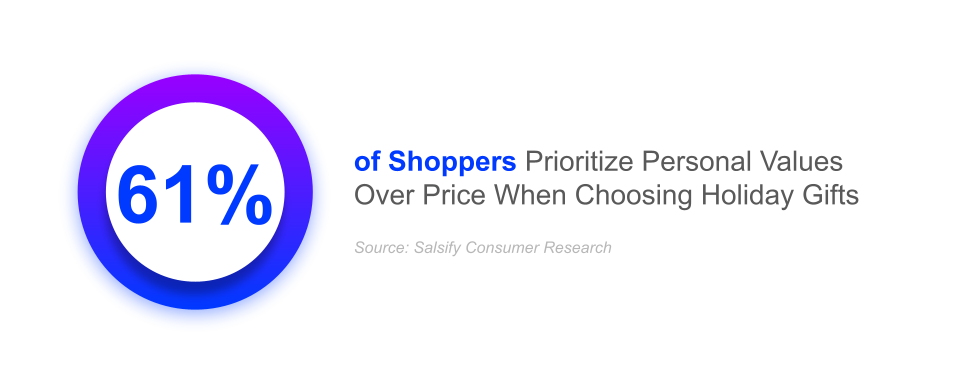
According to Salsify's "2025 Holiday Pulse Report," 61% of shoppers will pay more for holiday gifts if a brand aligns with their personal values.
And, according to research from Deloitte, more than two-thirds of global millennials are willing to pay more for sustainable products.
Salsify’s “2024 Consumer Research” also reports that 34% of shoppers are resonating with eco-friendly packaging and 27% with fair labor practices.
If you want to appeal to millennial shoppers, you should be transparent about your sustainability practices and your social stances. Dedicate parts of your website to the causes that you’re passionate about and the efforts you’re taking to support them.
Outdoor clothing and gear brand Patagonia does this extremely well. The company’s site has a web page entitled “Activism” that promotes different causes and offers customers an opportunity to show their support.
If you’re a makeup brand, for example, you could commit to making products with environmentally friendly, clean ingredients. If you’re an alcohol brand, you could establish a recycling program for customers’ empty bottles.
Making your brand more sustainable won’t just benefit the earth — it will capture millennial shoppers’ attention (and money).
Gen X Shopping Habits
Gen X is often called the “sandwich generation” because it borders millennials and baby boomers. They prefer in-store shopping, high-quality products, and remaining fiercely loyal to their favorite brands.
Gen X Prefers Brick-and-Mortar and Shopping Online Marketplaces
Gen X is just as online as its millennial counterparts. Still, most Gen Xers spend their time on social media platforms like Facebook (92%), YouTube (78%), and Instagram (78%), with growing usage of TikTok (54%) and Threads, according to Sprout Social.
However, only 19% of Gen Xers are purchasing on social media, compared to 33% of millennials, according to Salsify's latest report. You can reach both demographics through customer ratings and reviews, though, as 31% of Gen Xers and 30% of millennials check out online chatter before making purchases.
Gen Xers favorite channel, however, is still physical retail stores for product discovery (61%) and a close second for purchasing (72%) behind online marketplaces like Amazon (73%).
Gen X Values Durability and Longevity, Brand Reputation and History
Gen X values durability and longevity as well as brand reputation and history as the top indicators of product quality and value, according to Salsify research.
They're also heavily influenced by price, too: 50% abandon cart due to high prices, and more Gen Xers (62%) than millennials (52%) consider pricing and availability the most important product page element.
You can emphasize product quality with well-designed product pages, lifestyle images, and customer reviews.
Gen X Has Fierce Brand Loyalty
Gen X is willing to spend extra on a brand they trust, with 64% willing to do so, according to Salsify's latest research.
If you want to gain and retain their brand loyalty, consider creating a loyalty program that incentivizes more purchases.
If you don’t have a strong presence on Facebook, this is a great place to connect with Gen Xers and promote your brand. They’ll appreciate the opportunity to engage with you on their favorite social media platform.
Gen Xers expect high-quality, seamless experiences, so by nurturing their brand loyalty, you’ll both reap the rewards.
How Do Millennials and Gen Xers Feel About AI Shopping and Agentic Commerce?
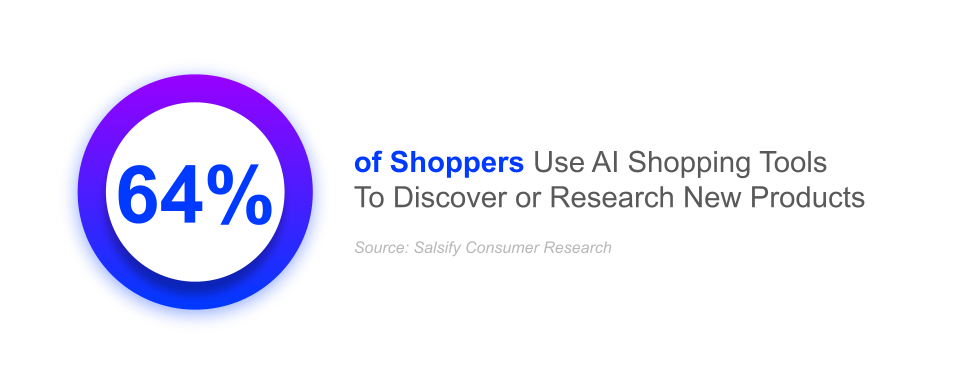
Shoppers are increasingly interacting with AI throughout their buying journeys: 64% of shoppers use AI tools to discover and research new products and brands, according to Salsify's "Ecommerce Pulse Report: Q4 2025."
As you can imagine, however, there are some differences in how millennials and Gen Xers are using or warming up to these technologies.
How Millennials Use AI Shopping Tools and Think About Agentic Commerce
The latest Salsify research found that when using existing AI shopping tools or thinking about agentic commerce:
-
22% of millennials say they trust and use AI shopping tools regularly.
- 32% have purchased a product because an AI search tool or shopping assistant recommended it.
- 30% are interested in agentic commerce, where agents could discover, research, and purchase items on their behalf based on their goals and preferences; 45% are somewhat interested and would use it for some purchases.
- Millennials (41%) cite trust in AI tools more than any other generation, saying that "AI tools know more than I do and are impartial" and marked it as a top reason for being interested in agentic commerce; they also cite convenience (40%).
- However, 27% of millennial shoppers say they wouldn't trust AI shopping agents, and 20% wouldn't use them because they like to be fully in control of their shopping.
How Gen Xers Use AI Shopping Tools and Think About Agentic Commerce
When using existing AI shopping tool technology or considering agentic commerce:
- 15% of Gen Xers trust AI shopping tools and use them regularly.
- 20% have purchased a product because an AI search tool or shopping assistant recommended it.
- 21% are interested in agentic commerce, where agents could discover, research, and purchase items on their behalf based on their goals and preferences; 39% are somewhat interested.
- Gen Xers cite convenience (35%) and time-savings (33%) as the top two reasons for being interested in agentic commerce.
- However, 34% of Gen Xers wouldn't trust agents' decision-making or or information, and 33% wouldn't use them because they like to be fully in control of their shopping.
Recap: 3 Best Ways to Capture Millenials vs. Gen X Shoppers
So, what’s the side-by-side, bottom-line, TL;DR takeaway in this post when it comes to selling to different generations?
To appeal to millennial shopping habits, focus on:
- Creating engaging, thorough omnichannel experiences;
- Being cognizant of shoppers’ financial situations; and
- Promoting your sustainable efforts.
When trying to appeal to Gen X shopping habits, focus on:
- Creating excellent in-person shopping experiences;
- Highlighting product quality; and
- Encouraging brand loyalty.
How To Appeal to All Your Audiences? It’s Personal
As you can glean, each generation requires a different approach, but there’s some overlap. As long as you’re offering personalized, high-quality experiences, you’ll win over millennials and Gen Xers alike.

2026 Consumer Research Report
Consumers don’t just want to feel satisfied at checkout — they want to be fully engaged. Download our report for more generational insights.
DOWNLOAD NOW
Insight Into Consumer Shopping Behaviors
Download the “2024 Consumer Research” to learn how you can tailor your digital marketing strategy to meet global consumer demands.
DOWNLOAD REPORT.svg)
