


Unlike legitimate Banksy’s, data on the latest consumer trends and shopping habits is fairly easy to find.
But understanding what to do with this intel and applying it to the constantly changing physical, digital, and, now, agentic shelf — and your strategy — can be a regular Piccadilly Circus. (Or an irregular one, whichever sounds worse.)
Based on data from Salsify’s “2026 Consumer Research” report, a survey of nearly 3,000 shoppers across the U.S., U.K., and Canada, here’s an in-depth breakdown of the buying behavior of U.K. shoppers, including just how keen they are on AI shopping tools and agentic commerce.
The Verticals U.K. Shoppers Fancy the Most (and Least)
Across the U.S., U.K., and Canada, the top three verticals for online shopping have remained steady: fashion and apparel, food and beverage, and electronics. Of course, there are some variations across markets.
In the past year, U.K. shoppers have reported buying online from the following product categories and verticals:
-
65% said fashion and apparel
-
62% said food and beverage
-
57% said electronics
-
55% said personal care and beauty
-
49% said alcohol
-
49% said household supplies
-
47% said health and wellness
-
42% said furniture and home goods
-
35% said home improvement
-
32% said sports and outdoor
-
25% said toy and baby
Worth noting: Just 29% of shoppers in the U.S. and Canada reported purchasing alcohol online — a clear difference from the spirit of the U.K. online shopper.
Additionally, U.K. shoppers cite convenience (62%), better pricing (61%), 24/7 shopping availability (38%), and wider product selection (33%) as the top reasons they shop online instead of in-store, all on par with those in the U.S. and Canada.
When viewed through this lens, the top verticals make sense. Fashion and apparel brands have an obvious advantage among the online shopper: brick-and-mortar stores limit the sizes, colors, and volume of merchandise available (not to mention how well things are pressed).
And food and beverage online purchases are on the rise (because it’s ridiculously convenient), and perhaps easier to filter for better deals, ingredients, and availability.
Consumer Trends Takeaway: Make Online Shoppers Feel Special
All brands can benefit from perpetual optimization of their online listings — whether they’re trying to drive sales on the physical shelf, digital shelf, or, now, the agentic shelf.
It’s no longer a matter of if shoppers are willing to buy any type of product online, but when, and if you can capture their interest with compelling images and videos, social proof, or even exclusive online discounts.
How U.K. Gen Alphas Influence Different Purchases
Speaking of purchases across verticals, the youngest generation, Gen Alpha (ages 0–15), is already making sure their voice is heard — and parents are listening:
-
44% of Gen Alpha parents in the U.K. say their children influence some household purchases.
-
23% of these parents say their Gen Alpha child has moderate influence and regularly influences household purchases (more than in the U.S. and Canada).
-
These children influence food and beverage (26%), fashion and apparel (21%), and electronics (15%) purchases the most, with U.K. Gen Alphas also influencing sports and outdoor (14%) and toy and baby (17%) more than their counterparts in the U.S. and Canada.
Consumer Trends Takeaway: Cater To Kids (And Kids at Heart)
Marketing to Gen Alphas doesn’t necessarily happen directly. Instead, brands must have content and messaging that appeals to families as a whole.
To cater to kids (and kids at heart) of all ages, brands should use language in their product content and messaging that appeals to parents; leverage family-friendly user-generated content (UGC); and play up nostalgia by combining content that nods to parents’ childhoods and combines characters from the here and now.
Where U.K. Shoppers Discover New Products and Brands
What U.K. shoppers are shopping for has more or less been covered.
Here’s where U.K. shoppers primarily discover new products and brands:
-
60% say physical retail stores
-
57% say online marketplaces (e.g., Amazon)
-
48% say social media (e.g., TikTok, Instagram)
-
31% say retail websites (e.g., John Lewis)
-
26% say brand websites (e.g., Nike)
Additionally, 15% of shoppers in the U.K. use AI search tools (e.g., ChatGPT, Gemini) more than product review websites and online forums like Reddit.
This is fewer than shoppers in the U.S. (24%) and Canada (17%), but it’s a growing trend worth examining (and one they’re participating in more in the research stage).
Consumer Trends Takeaway: ‘Storysell’ — in Stores and Online
Shoppers still love (or have found love again) browsing in-store. Focusing on omnichannel experiences that incorporate technology (QR codes on labels, interactive displays) can help curious shoppers enter your brand’s world, understand your story, and build loyalty.
How U.K. Shoppers Research New Products and Brands
How shoppers decide what to buy can be the trickiest part of the buying journey to define, as they’re likely surfing multiple channels just in this one stage.
Here’s how U.K. shoppers research new products and brands:
-
49% say online marketplaces (e.g., Amazon)
-
45% say physical retail stores
-
41% say social media
-
30% say retail websites
-
28% say brand websites
-
21% say AI search tools
Even 10% of U.K. shoppers say they’re researching new products and brands through delivery apps, emphasizing the importance of access and availability in their purchase decisions.
More than half of U.K. shoppers use two to three different channels to research everyday items (i.e., food and beverages, household items) and mid-range items (i.e., fashion and apparel, sports and outdoor) before they purchase. However, about a third of U.K. shoppers (32%) will use four to six channels for big-ticket items like furniture and electronics.
Consumer Trends Takeaway: GEO and AEO Mean the End of TMI
Shoppers are in their research-happy era. Even while in physical retail stores, 38% may pull out their smartphones to do additional research or compare prices (34%).
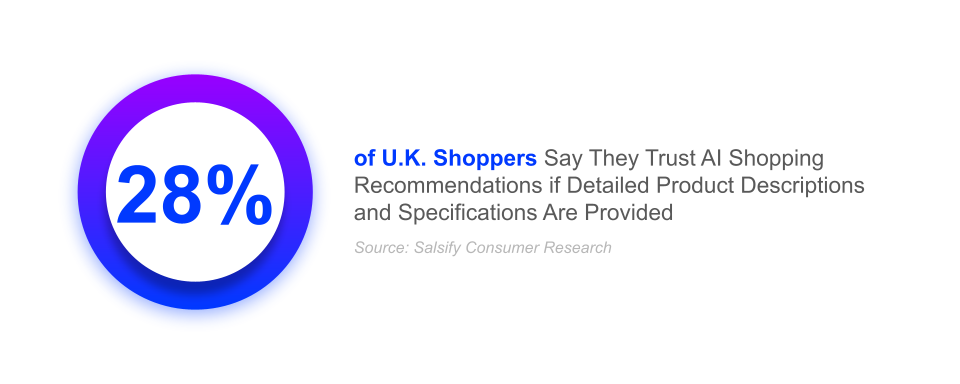
Other elements that inspire confidence they’re making the right choice include UGC, customer ratings and reviews, and, if they’re using AI search tools, 28% of U.K. shoppers say detailed product descriptions and specifications help them trust the provided recommendations the most.
Make sure your product detail pages (PDPs) are clear and compelling; expanding upon your content to include answers to intent-based questions like, “Is this bag good for holidays on the beach?” or “Would this dress be appropriate for a garden wedding?” can help funnel both human audiences and agentic interest.
In this era of generative engine optimization (GEO) and answer engine optimization (AEO), there’s no such thing as TMI.
Where Do U.K. Shoppers Purchase New Products and Brands?
In-store shoppers are returning in droves, especially for product discovery and purchase — but if you’re not being found on online marketplaces like Amazon, it might be hard for shoppers to find you at all.
Here’s where else U.K. shoppers purchase new products:
-
66% say online marketplaces
-
64% say physical retail stores
-
34% say retail websites
-
31% say brand websites
-
24% say social media
-
15% say delivery apps, which is higher than in the U.S. and Canada
Obviously, too, the osmosis of in-store to online and back again is as strong as ever: 61% of U.K. shoppers reported participating in webrooming, where they view an item online and purchase it in-store, and 51% reported participating in showrooming, where they view an item in-store and then later purchase it online.
Twenty-eight percent have even made a purchase on their smartphone while physically in a store.
Consumer Trends Takeaway: Centralize, Connect, and Automate
The continued floating of shoppers between digital and physical shelves puts further onus on brands to ensure their physical and digital presences are aligned with effective, up-to-date content syndication. If something’s amiss, a sale can easily be lost.
Unfortunately, cart abandonment rates are at an all-time high (70% globally, according to Statista); but most U.K. shoppers abandon purchases due to no or low customer ratings and negative reviews (38%), inconsistent product information across websites (32%), no or low-quality product images and videos (29%).
All of these things are easily within brands’ control. Implementing enhanced content (aka A+ content on Amazon) and sourcing product content from a single source of truth that can automate updates is a must for excellence across all shelves in 2026.
Online Shopping Habits and Preferences of U.K. Consumers
U.K. shoppers aren’t overdoing it: They’re less than half as likely (7%) to shop online daily as U.S. shoppers (15%) but more than shoppers in Canada (5%).
However, they’re most likely to shop online once per week (27%), versus shoppers in the U.S. (18%) and Canada (20%).
While they’re browsing, though, it’s important to make their minutes count.
Here are the most important PDP elements according to U.K. online shoppers:
-
60% say product images and videos
-
57% say pricing and availability
-
54% say customer ratings, reviews, and UGC
-
32% say enhanced content (e.g., comparison charts, feature tours, branded content)
You’re off to a great start if you have these elements on your PDP; however, there’s even more to achieve through your content.
Here are the factors that make U.K. shoppers perceive high product quality and value:
-
50% say durability and longevity
-
32% say transparent ingredient or material lists
-
30% say certifications (e.g., organic, cruelty-free, fair trade)
-
30% say product origin
-
26% say sustainable or recyclable packaging
Consumer Trends Takeaway: Have an Opinion, for Pete’s Sake
Ensuring you tell the story (through social proof, demos, etc.) of your products’ durability and longevity, ingredients, origin, and sustainability can help you win higher marks among U.K. consumers.
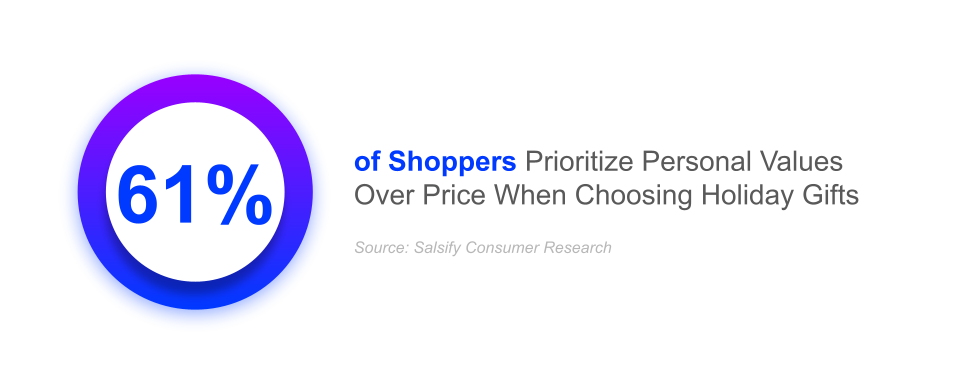
But there’s a lot to be said about authenticity — ensure your brand shares clear stances — not just fluff — to cultivate conversation. Having an opinion pays off, though, as 61% of shoppers prioritize personal values over price when choosing holiday gifts, according to Salsify’s “2025 Holiday Pulse” report.
What Makes U.K. Shoppers Trust Brands?
Brand loyalty might not be what it used to be, depending on whom you ask. There are simply too many up-and-coming brands, access to competitors, and fluctuations in pricing and availability for shoppers to pick one and be done.
However, U.K. shoppers shared that the following factors make them trust brands:
-
60% say brand reputation
-
63% say product quality and value
-
51% say customer service and experience
-
45% say positive customer ratings and reviews
-
43% say high-quality product content (e.g., product images and descriptions)
And, overall, 61% of U.K. shoppers have paid more for a product in the past year because they trust the brand, compared to 60% in Canada and a whopping 82% in the U.S. This shows that U.K. shoppers are keen to pick favorites — but aren’t totally loose with their purse strings.
Consumer Trends Takeaway: Get Returners To Return
Even after a sale, 36% of shoppers in the U.K. have returned an item due to incorrect product content (e.g., incorrect product descriptions, misleading images). U.S. shoppers are far more likely (63%) to do so.
Limited issues on PDPs are paramount. However, if returns occur, brands can still shine by nurturing customers and making things right through free or automated return-and-exchange technology or partnerships with drop-off programs through the local post.
How U.K. Shoppers View AI Shopping Tools and Ecommerce Agents
Ah, that bloody “A” word. There’s understandably enthusiasm mixed with hesitancy toward AI shopping tools and ecommerce agents emerging from the agentic shelf.
Here’s how much U.K. shoppers trust AI shopping tools:
-
33% don’t use them
-
30% trust them for some purchases, but verify with other sources (more than the U.S. and Canada)
-
12% trust them and use them regularly
-
6% don’t use them at all
With at least 42% of U.K. shoppers using AI shopping tools, they definitely can’t be ignored as a source of traffic for your brand. But how can you ensure your brand even shows up, or that shoppers will trust the recommendation?
Here’s what helps U.K. shoppers trust AI shopping tool recommendations:
-
28% say when detailed product descriptions and specifications are provided
-
26% say if there’s brand recognition
-
23% say customer reviews or ratings
-
22% say a personalized explanation for why it fits my needs
Beyond the product discovery and research aspects of AI shopping tools, agentic commerce (an AI shopping agent that can automatically discover, research, and purchase products for you based on your goals and preferences) is also nigh.
Here’s how interested U.K. shoppers are in agentic commerce:
-
43% are somewhat interested and would try it for certain purchases (more than in the U.S. and Canada)
-
36% are not interested and unlikely to try it out
-
21% are interested and would use it regularly
That’s 64% interest — nearly two-thirds of shoppers are willing to tag in ecommerce agents to tackle their shopping, so brands best be prepared.
Consumer Trends Takeaway: Rev Up for Further Agentic Adoption
As of right now, not every shopper is shopping the agentic shelf. And it definitely won’t completely replace traditional ecommerce, says Rob Gonzalez, Salsify’s co-founder and chief innovation officer, in an interview with TechBullion.
However, technology that directly boosts convenience and time savings so exorbitantly is one that’ll likely take off regardless, and brands need to be ready when that happens by optimizing for SEO, GEO, and AEO (right now).
Chuffed for Consumer Trends?
Shoppers are shopping everywhere, all the time — fine-tuning your strategy for reaching them at the right moment, on the right channel, with the right offer is increasingly complex.
Understand their preferences firsthand by following consumer trends — it’s one of the most critical ways to ensure you’re on track. (Cheers to that!)

2026 Consumer Research Report
Download the full report for breakdowns and highlights of the most interesting consumer trends across geographies, generation groups, and gender, plus actionable insights for how your brand should respond.
DOWNLOAD NOW.svg)
