



Every region has its own hyperlocal advertising celebrities: the carpet guys, the car dealers, the electronics madman who always seemed one discount away from a complete nervous breakdown.
And while they weren't exactly international luminaries, many ended up becoming cultural institutions within their own markets — the kind of familiar faces you might spot in the cereal aisle before thinking, "Wait ... isn't he … that guy?"
If you grew up in New England, “that guy” — or at least one of the most recognizable ones — was Eliot Tatelman, of Jordan’s Furniture. Rather than rattling off sale prices or talking into the camera, Eliot and his brother Barry built many of Jordan's commercials around absurd premises, many in which they were often more than happy to indulge themselves.
Video Source: Group Galaxy Entertainment
Instead of polished pitchmen, the Tatelmans came across as approachable, self-aware, and above all, willing to laugh at themselves. That creative style turned typically forgettable furniture commercials into something viewers actually talked about and remembered for years after they aired.
That strategy worked extremely well for the brand in the ’80s, ’90s, and ’00s. But as shopping habits changed with the digital landscape, the company faced a familiar challenge for legacy brands: These days, the buying journey is more likely to begin on a phone, online marketplace, or even with an AI assistant than through local cable.
As Jordan's enters a new era — and the brothers step away from their leadership roles — the company faces a big question: How can their brand preserve the homespun expertise that made the brand so memorable, even in the digital age?
Jordan's Furniture: A Case Study in Product Experience Transformation
For Jordan’s, product experience transformation means taking everything shoppers already trust about the brand — its personality, product expertise, and decades of customer knowledge — and translating it into a digital shelf strategy and experiences that feel just as helpful and human as the showroom floor.
That's a big reason Salsify wanted to sit down with Paige Chilson, director of site merchandising at Jordan's Furniture, for an episode of the Digital Shelf Institute (DSI) podcast, “Unpacking the Digital Shelf.”
In "Getting to the Nano Layers of Product Experience Transformation," Chilson explains how Jordan's is evolving its digital experience without losing what made the folksy retailer so memorable in the first place.
That work revolves around a few core practices: giving product data more context, capturing the expertise hidden inside the organization, and turning that knowledge into experiences that help shoppers better understand what they’re buying.
Turn Product Attributes Into Shopper Context
When it comes to furniture, product information can do more than describe an item. It can help shoppers understand how that item will look, feel, and perform in their homes. But that only happens when product details are connected to the questions shoppers are already asking.
That’s why Chilson encourages her team to move beyond surface-level product bullets and look for the details that explain their value and relevance. Instead of simply describing a piece as “well built,” the team might dig into how the wood was dried, how that process affects moisture levels, and why that might matter once it’s inside a customer’s home.
For shoppers, that context makes the product easier to evaluate: While a customer may not know to search for kiln-dried wood by name, they may perk up when they learn that the process can help furniture resist moisture, maintain its shape, and hold up better over time — especially in humid climates.
The same context can also make product information more useful to AI-powered search and discovery tools. If shoppers are looking for furniture that will last in a humid climate, richer product data gives those systems more to work with than a standalone attribute ever could.
Capture the Expertise Hidden Inside Your Organization
The product context Jordan’s customers need doesn’t always begin in a product feed. Often, it starts in conversations with the people who know the category best.
For Chilson, that means treating buyer knowledge as something to be captured, organized, and reused. She describes the work as an “extraction mission”: interviewing buyers, asking why products made it into the assortment, and pushing past broad claims like “high quality” until the team finds the specific details behind them.
Those conversations then become raw material for the digital experience across the digital shelf. Chilson says new team members review hours of buyer discussions to understand the product knowledge that already exists inside the business.
From there, the team can begin formalizing that expertise into a data structure that product pages, search, content, and AI-powered discovery can actually use.
That process matters because institutional knowledge is fragile when it stays informal. Product experience transformation turns it into something scalable.
The Digital Shelf: Build Experiences That Reinforce the Brand Promise
Once that product knowledge is captured, the next step is making sure it shapes the customer experience across the digital shelf. For Jordan’s, that means using product data, search, UX, and content to make the brand’s new promise — “We get you. We got you.” — feel real online.
Chilson explains that the site is often the first place shoppers encounter the brand, so the digital experience has to feel as helpful and intuitive as the in-store one. That can be as simple as making sure site search understands natural language.
In other words, a customer should not need to know Jordan’s internal taxonomy to find what they want. If they search for a “fuzzy pillow,” the site should understand the request and help them get there.
But the same principle applies beyond search. Product pages, navigation, content, and omnichannel commerce features all need to support the way shoppers actually move between online and in-store experiences.
Ultimately, a stronger product experience does not ask customers to adapt to the retailer’s systems. Instead, it makes those systems feel more natural to the customer.
Ecommerce Conversion: Prepare Product Content for AI-Powered Shopping
As shopping journeys become less linear, brands need product content that can be understood beyond the product page. Search engines, marketplaces, AI assistants, and other discovery tools all depend on clear, structured information to understand when a product is relevant.
For Chilson, AI-powered shopping makes that level of detail more important. She calls this deeper level the “nano layer”: the specific product information that “goes beyond” a standard bullet point or attribute.
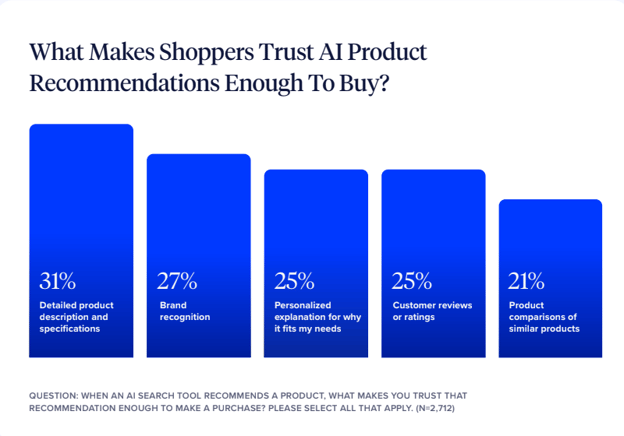
In fact, more shoppers (31%) trust AI recommendations enough to purchase if they surface detailed product descriptions and specifications than other factors, like brand recognition (27%) and even personalized explanations of benefits (25%), according to Salsify’s “2026 Consumer Research” report.
In furniture, that might include material choices, construction methods, drying processes, quality signals, along with the aforementioned context that explains why those details matter.
For brands, that changes the job of product content. When it comes to ecommerce conversion, it’s no longer enough for information to look complete on a product page; it also has to be structured and contextual enough for digital systems to interpret, summarize, and surface it across the wider shopping journey.
Product Experience Transformation Starts With What Brands Already Know
Product experience transformation isn’t about digitizing the catalog as is. It’s about uncovering the expertise behind the catalog and turning it into a seamless, easy-to-use experience for shoppers.
For Jordan’s, that meant translating a century of brand personality, product knowledge, and in-store care into the digital places where customers now browse, compare, and make decisions.
How is your brand responding to the challenge?
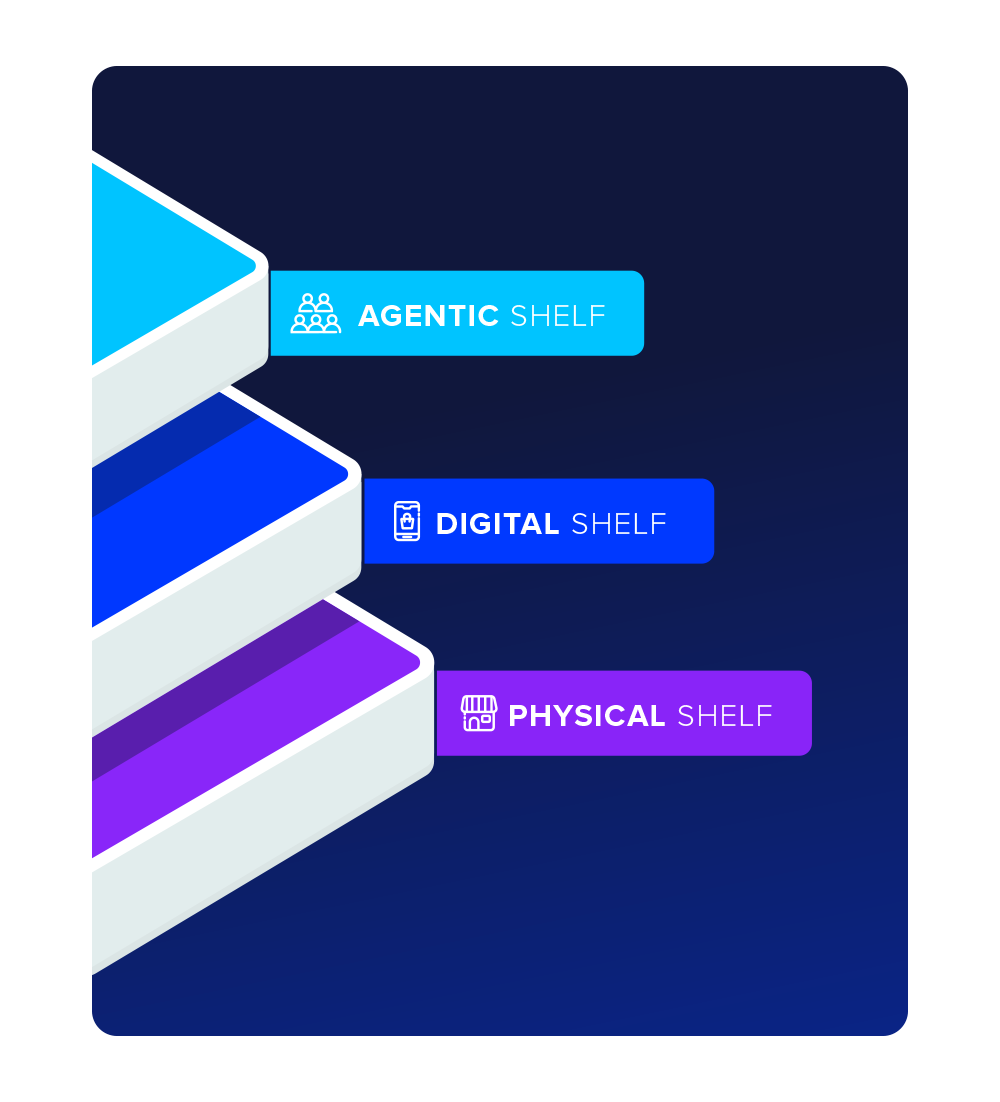

Agentic Shelf PXM Playbook for AI Growth
As AI-powered discovery reshapes how shoppers find, compare, and choose products, brands must build product experiences that go beyond the PDP. Learn how to prepare for what comes next in Salsify’s agentic shelf PXM playbook for AI growth.
DOWNLOAD NOW.svg)
