


AI is steadily becoming a core capability for ecommerce teams, from generating product descriptions and localizing product content to delivering personalized product recommendations for shoppers.
However, as business-to-business (B2B) sales organizations embrace these AI-enabled workflows, they aren’t sacrificing the critical human touch that builds long-term customer relationships and repeat business.
Here’s how AI in B2B sales is currently taking shape and what it means for your organization’s strategy.
AI Is Becoming Mainstream in B2B Sales
AI in B2B sales is moving beyond experimentation — it’s now table stakes.
Only 8% of sellers don’t use AI, according to HubSpot. The 92% who do are typically adopting GenAI tools like Google Gemini and ChatGPT or marketing-specific and content generation platforms such as Jasper or Copy.ai.
Teams are also using AI in B2B sales for customer prospecting and personalization, tailoring their messages to different buyer groups or personas.
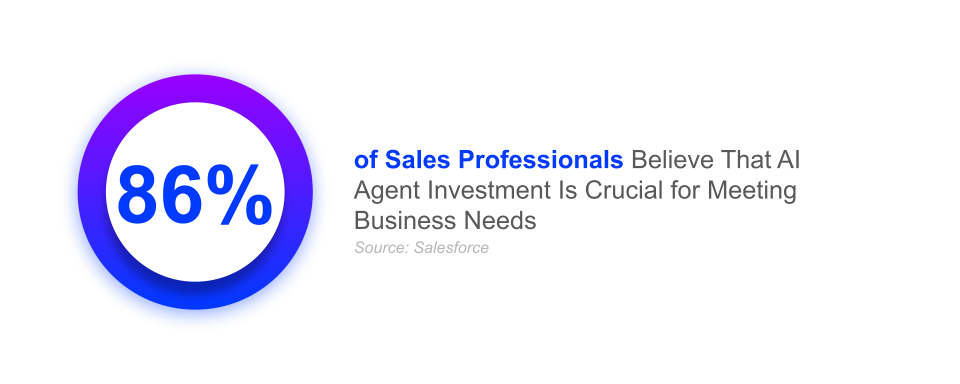
B2B sales teams are especially bullish about AI agents, which can handle end-to-end processes, saving sellers time and increasing their efficiency. According to Salesforce’s “2026 State of Sales Report,” 86% of sales professionals believe that AI agent investment is crucial for meeting business needs.
As B2B sales go digital, they’re also becoming more AI-powered. However, sales organizations aren’t using AI as a workforce replacement. Instead, they’ve transformed it into the ultimate workforce enabler.
The Power of AI-Human Collaboration in B2B Sales
AI is improving seller efficiency, but it isn’t completely taking over the sales process or customer relationship management.
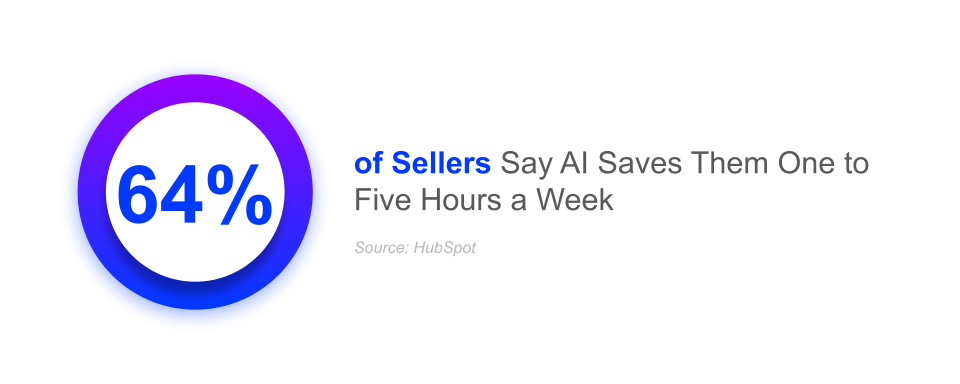
According to HubSpot, 64% of sellers say AI saves them one to five hours a week. Additionally, 35% say automation is the technology’s biggest benefit, as it spares them from manual work.
Additionally, HubSpot found that sellers often edit AI-generated text and use its suggestions to support their decision-making, leaving a human seller to handle final review and approval.
With AI tackling more administrative duties, sellers can focus on what they do best — selling. They also can spend more time nurturing customer relationships and providing the type of high-touch, personalized customer service that’s so critical in B2B sales, where they must convince companies to make a five- or six-figure investment.
AI Is Driving Noticeable B2B Sales Results
AI is already having a noticeable impact in B2B sales: Sellers who effectively integrate AI into their work are nearly four times more likely to hit quota, HubSpot found.
A separate analysis from marketbetter.ai, an AI-powered sales development representative (SDR) operating system, found AI-enabled teams experience a 10–20% improvement in sales return on investment (ROI) compared to non-AI-enabled teams. Their sales cycle is also 25% shorter.
AI is a force multiplier for sellers, allowing them to focus on high-value strategic activities that require their unique skills and judgment — not tedious tasks AI can easily automate.
AI in B2B Sales: Lingering Trust and Implementation Gaps
For as much as B2B sales teams are embracing AI, there’s a lingering AI trust gap that these organizations must overcome, both internally and externally.
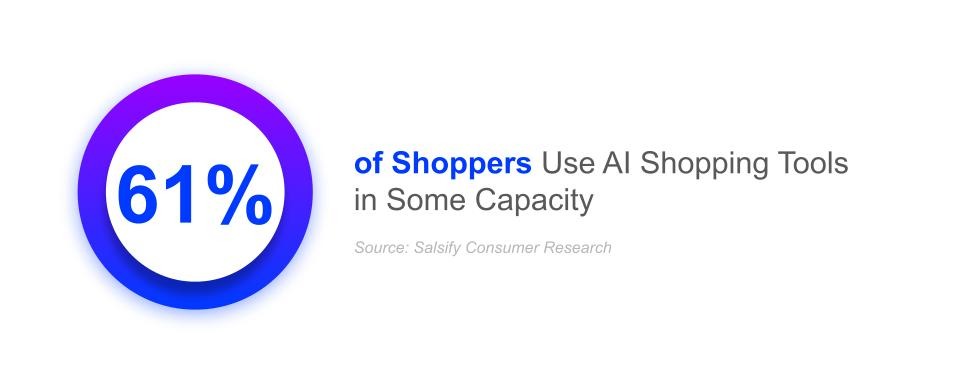
Customers still don’t fully trust AI. Though 61% of shoppers use AI tools in some capacity, only 14% trust AI recommendations enough to actually purchase without seeking additional information elsewhere, according to Salsify’s “2026 Consumer Research” report.
Organizations also face data readiness and data accessibility challenges that hinder their ability to deliver accurate reporting and provide AI systems with usable data.
Quality data is the foundation of trustworthy, reliable, and accurate AI-driven experiences, so companies must address these issues to truly make AI an embedded operational capability.
Implementation gaps also widen the AI trust gap internally. “Roughly three in four sellers feel under-supported in using the technology, with training offerings too episodic to build lasting confidence,” according to a 2025 Boston Consulting Group (BCG) analysis.
Preparation Facilitates Maximum AI Effectiveness
In B2B sales, AI is delivering early value in the form of increased automation and seller productivity.
But to scale AI adoption and advance their AI maturity beyond the administrative use cases we’re currently seeing, organizations need to do more backend work to increase their data readiness, continuously upskill and train sellers, and effectively integrate AI tools into their core systems.
This can help reduce the context switching that sellers likely experience when they use standalone AI tools and allow organizations to drive even more value — and revenue impact — by using AI in B2B sales.
4 Ways To Optimize Human-AI Collaboration In B2B Sales
B2B sales organizations need to develop an effective framework for AI-human collaboration. Here’s how they can create the right operating model for applying AI in B2B sales.
1. Augment, Rather Than Automate, To Start
Find low-risk, low-hanging fruit use cases and apply AI to them. These can include tasks like drafting follow-up email messages after a sales call, extracting insights from meeting notes, or doing competitive research that informs objection handling in sales decks.
2. Focus on Workflow Transformation
Most leading companies invest at least 80% of their AI spend on revamping core functions and creating new offerings, according to BCG.
Once your team begins to experiment with AI use cases, don’t stay in the experimentation phase for too long.
Scale to higher-value use cases that drive immediate impact, such as analyzing historical deal data to pinpoint at-risk deals, improve forecasting, or predict whether a prospect is likely to convert.
For example, teams can use AI predictive recommendations for “next best action” steps, which will help sales reps identify potential opportunities earlier and sell proactively.
3. Prioritize Change Management
Often, new AI use cases will emerge from employees. They’re immersed in the work of B2B sales every day, so they’re more likely to spot opportunities where the organization can use AI for further sales process optimization.
Create a feedback loop to gather employees’ insights, which will also build buy-in for AI implementation. Move from sporadic training to a continuous upskilling program that helps sales reps and leaders get more comfortable with AI tools and use them more frequently — and responsibly — in their work.
Your company can approach training in several ways, whether it’s on-demand webinars, 10-minute micro-learning training modules, or monthly lunch-and-learn sessions focused on AI enablement and sharing best practices.
4. Always Keep a Human in the Loop
B2B sales organizations should develop rules and parameters for how they will and won’t use AI for customer engagement.
Your company’s broader AI governance policy should inform your team’s AI playbook. But generally, you should keep sellers in control of relationship building, negotiations, and any activity that requires a high degree of institutional knowledge, like explaining key product features and use cases in response to a customer’s question.
Humans should take charge of anything that’s customer-facing, and AI can play a supporting role in these efforts to expand their capacity.
Creating an AI-Powered B2B Sales Organization
AI is just another lever B2B sales teams can pull to become more efficient and produce better results faster.
The technology is reshaping B2B sales and will soon become a key strategic capability. However, it will never fully replace sellers’ unique skills and experience.
Organizations will always need to lead with empathy, judgment, and trust. A personal, human touch will always be important in B2B sales, but now teams can also count on a powerful assist from AI.

Learn More About AI in Salsify
Watch the AI in Salsify webinar series to unlock the power of AI for workflows, productivity, and next-gen governance.
GET STARTED HERE.svg)
