



Considering the wide-ranging economic pressures facing online shoppers today, it’s easy to forget that most aren't simply choosing the cheapest options by default.
While shoppers do love a good bargain, they matter less when it comes to the ways they determine which brands to trust, according to Salsify’s “2026 Consumer Research” report.
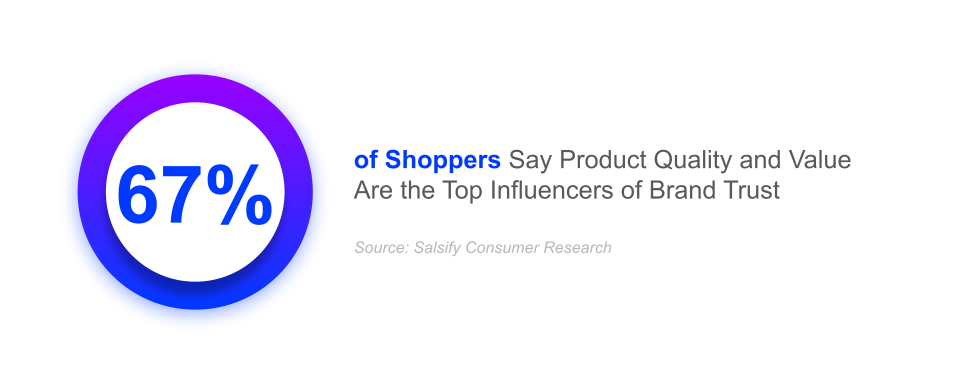
In fact, 67% of shoppers say product quality and value influence whether they trust a brand, making it the single strongest driver of brand credibility. And when you consider 68% of respondents said they paid more for a product in the past year simply because they trusted the brand, it’s easy to see why these kinds of product details are so important for ecommerce brands.
Shoppers use omnichannel signals — durability, proof from other customers, transparency, and consistency — to decide which brands feel dependable enough to buy from in the first place.
Here’s a breakdown of what factors actually signal product quality and value to shoppers today, and how brands can reinforce those signals consistently across the digital shelf.
What Makes a Product Feel ‘Worth It' for Customers?
Online, shoppers are constantly on the lookout for concrete signals that can 1. reduce uncertainty and 2. help them feel confident about a purchase. Here are the top five value markers from Salsify’s latest research.
1. Durability and Longevity
According to Salsify’s findings, durability and longevity sit at the top of that list, with just more than half of shoppers (54%) pointing to how long a product lasts as the clearest indicator of quality and value.
2. Positive Customer Reviews and Ratings
Close behind, nearly half (47%) rely on positive customer reviews and ratings — they want direct social proof that a product can perform as advertised in real-world scenarios.
3. Brand Reputation
Brand reputation and history also do some heavy lifting, suggesting that reliability over time brings more value to the table than a one-off good experience: 45% of shoppers rate it as a highlight of product quality and value.
4. Transparency
Transparency plays a similarly important role, with 42% of millennial shoppers saying clear ingredient or material lists influence their perception of quality and value. For millennials, this was tied with positive customer ratings and reviews as the second-most important value marker behind durability and longevity.
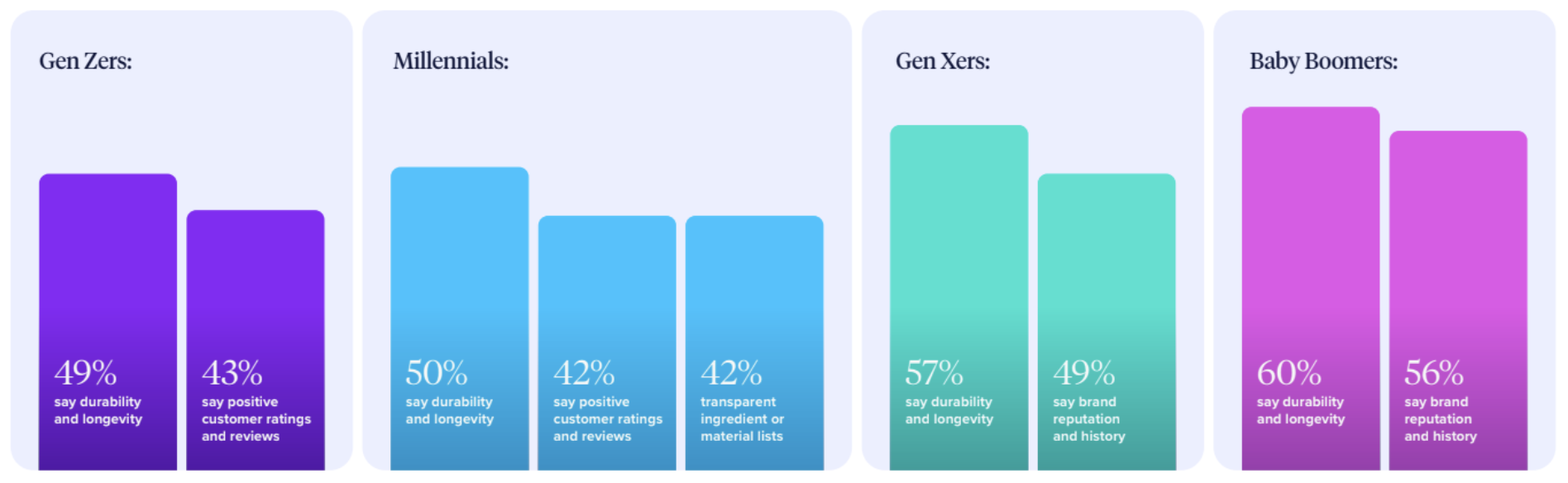
Image Source: Salsify Consumer Research
5. Competitive Pricing
Notably, competitive pricing ranks lower than all of these considerations, falling just outside the top five indicators at 35%. Price still matters, but seems to rarely be the deciding factor on its own.
Again, that ranking makes sense when you consider how shoppers actually behave. For example, most shoppers don’t rely on a single touchpoint to make a decision:
-
A majority (67%) participate in webrooming, researching products online before buying them in-store; and
-
More than half of shoppers (53%) participate in showrooming, where they check products out in person before purchasing online.
The Trusty Takeaway
As shoppers cross-check details across marketplaces, brand sites, retail sites, and physical shelves, signals like durability, reviews, and transparency help them determine how much to trust your brand and its products.
3 Ways To Reinforce Value Across the Digital Shelf
Perceptions of value aren’t shaped by messaging alone — it’s earned, through consistent execution. All of the ways your products are presented, validated, and explained across the digital shelf will play a decisive role in whether or not customers ultimately trust what they see.
1. Deliver Complete and Consistent Product Content Everywhere
Brands that earn credibility on quality and value tend to remove as much uncertainty from the buying process as possible.
Today’s customers compare details across marketplaces, retail sites, brand websites, and increasingly, AI-powered tools.
When product information doesn’t line up across those touchpoints — or is even absent altogether — it can foster doubt and drive customers away.
Salsify’s research on abandoned carts indicates:
-
38% shoppers do so because product information is inconsistent across websites.
-
34% walk away when product titles and descriptions feel unclear.
-
33% leave the sale when images and videos don’t do enough to show what they’re actually getting.
Think of consistency as acting as a proxy or implicit spokesperson for your brand’s reliability: If you can’t keep basic product details straight, shoppers might be left wondering what other elements might fall short.
2. Use Reviews and UGC as Proof of Quality
While product content helps shoppers understand what a product is supposed to do, reviews help them decide whether it actually delivers.
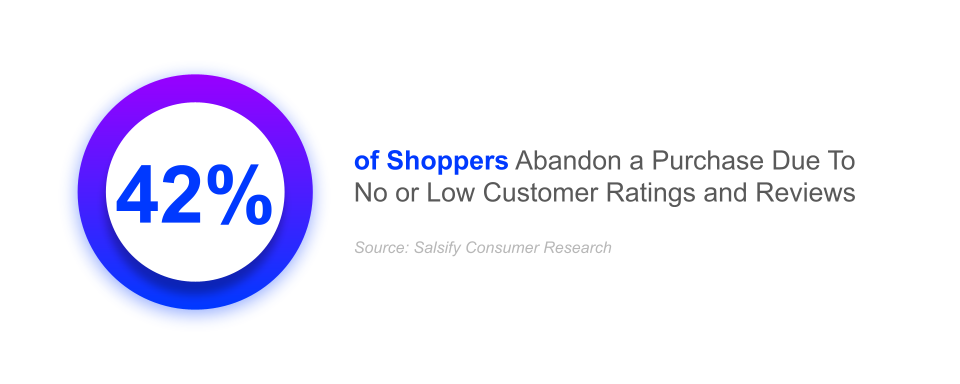
It’s one reason why customer ratings and reviews consistently remain one of the most influential elements on a product detail page. Negative reviews — or even no reviews at all — can drive many shoppers to forego a purchase altogether. In Salsify’s research, 42% of shoppers reported abandoning a cart for this reason.
Luckily, these days, reviews aren’t rare or hard to come by. A majority of shoppers have left a rating or review in the past year, and many do so to help other shoppers make better decisions. Smart brands can leverage this feedback — both good and bad — to build trust with their shoppers.
Ultimately, this kind of user-generated content (UGC) provides something brand claims can’t: independent confirmation. Reviews make durability, performance, and value visible through lived experience, and appear to be a significant factor tipping shoppers from consideration to purchase.
3. Reinforce Brand Values Through Transparency and Experience
For many shoppers, perceptions of quality and value extend beyond product performance alone.
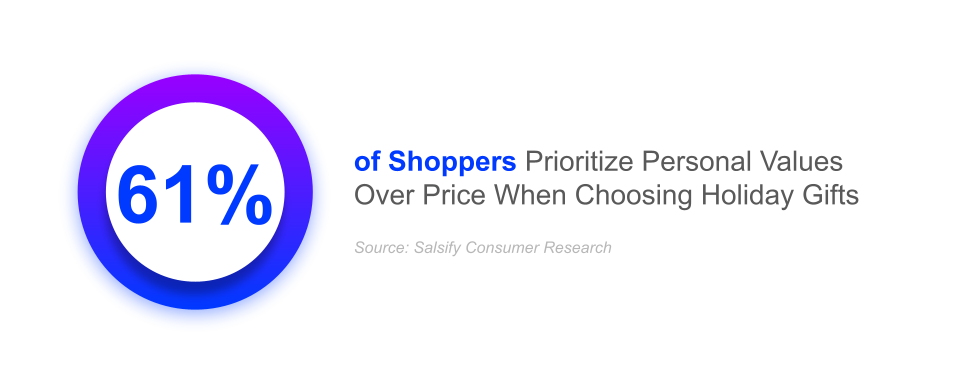
Personal values increasingly shape how consumers evaluate their brands of choice, particularly when they’re choosing holiday gifts. In past Salsify research, 61% of respondents indicated that values play a role in these kinds of purchasing decisions.
It’s yet another example of how trust is earned through consistent execution. As a result, transparency around materials, sourcing, and certifications often plays a meaningful role, contributing directly to whether a product feels well-made and worth the price.
Brand values build trust when they’re reflected in product details, sourcing information, and the overall shopping experience.
When values are consistently embedded into how products are presented and supported across the digital shelf, they reinforce the sense that a brand is dependable, credible, and aligned with what shoppers care about.
Value Isn’t Defined by Price — It’s Earned Through Trust
Shoppers are still budget-conscious, but they aren’t using price as a shortcut for value.
Instead, they evaluate value holistically: weighing how durable a product feels, how transparent a brand is, how consistently information shows up across channels, and what other customers have experienced.
Those signals matter more than competitive pricing alone, because they help shoppers decide which brands feel dependable enough to buy from in the first place.
For brands, the implication couldn’t be clearer: Product quality and value aren’t just aspirations to communication, but credibility to earn.
When durability, transparency, reviews, and consistent product content reinforce one another across the digital shelf, it reinforces the trust that ultimately converts shoppers to buyers.


2026 Consumer Research Report
Looking for more insights into modern consumer trends and what they mean for your brand? Check out Salsify’s latest consumer research report for a deeper look at how shoppers evaluate products, brands, and value today.
DOWNLOAD NOW.svg)
