
At first glance, olive oil doesn’t seem like a food item that screams for much reinvention. People have been cooking with it for over 6,000 years, and by now, its place in the kitchen is about as established as CPG brands can hope to get.
That’s one big reason why the upstart olive oil brand Graza decided to reinvent the experience around their product, rather than the wheel itself.
The brand put premium Spanish olive oil in colorful squeeze bottles inspired by professional kitchens — packaging meant to be grabbed, squeezed, and used generously rather than carefully rationed. The result felt fresh, distinctive, and a particularly strong fit for social media and creator content.
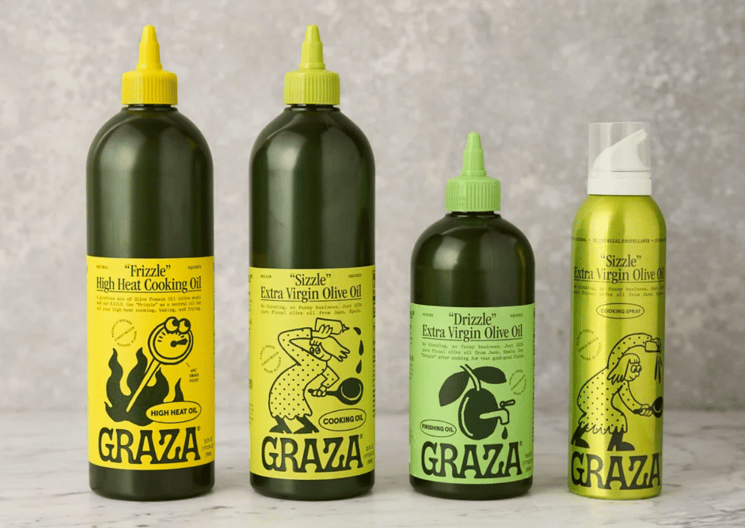
Image Source: Graza
The approach was simple, but incredibly effective: Graza launched direct-to-consumer (D2C) in January 2022, and that early momentum quickly carried over into retail. Within months, it was on Whole Foods shelves; by 2025, the brand was available in more than 11,000 retail locations and ranked as the country’s fifth-largest olive oil brand.
Graza’s rise is a powerful example of how rethinking the product experience can make a familiar category feel culturally distinctive — and how several smart approaches can work together to propel a brand into rapid retail growth.
Graza Made Olive Oil Look Like Something You'd Want To Share
Part of Graza’s appeal came from making a luxury-adjacent category that can feel surprisingly complicated much easier to understand.
Rather than asking shoppers to parse varietals, harvest dates, flavor profiles, and other heady distinctions, the brand initially offered just two options: “Sizzle,” designed for cooking, and “Drizzle,” intended as a finishing oil.
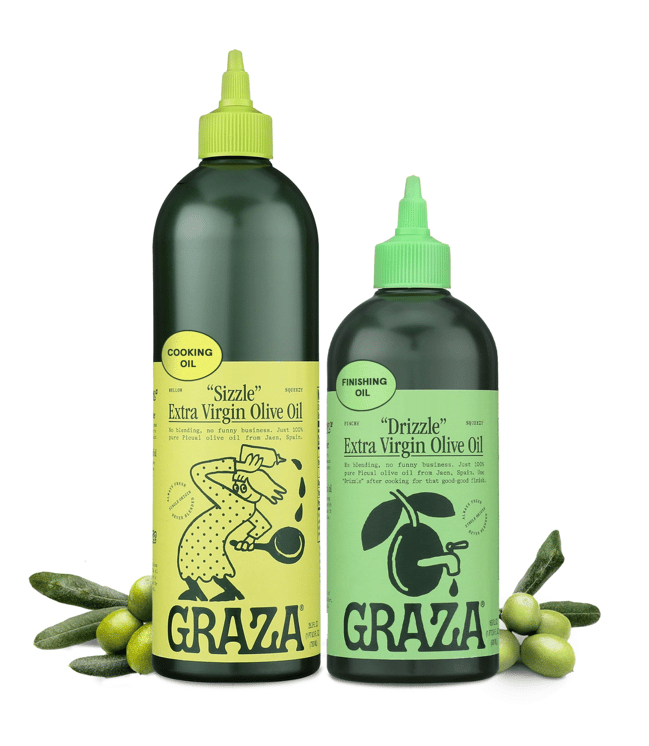
Image Source: Amazon
Boom. That’s it. Two things.
That same simplicity carried over to the packaging. Designed by creative agency Gander, Graza’s dark green squeeze bottles replaced the restrained glass-and-label aesthetic common to premium olive oil with bright colors, playful illustrations, casual messaging, and chunky typography.
The effect reinforced the basic Sizzle-or-Drizzle proposition: good olive oil didn’t have to feel fussy or ceremonial; it could be something you reached for every day.
And those choices made Graza difficult to mistake for anything else.
A dark green squeeze bottle with a bright yellow or green label could register immediately in a food photo or cooking video — even when the product wasn’t the focus.
That gave Graza something especially valuable for a brand building its audience through social media: packaging that could function almost like a visual signature wherever it appeared.
Digital-First CPG Brands Build on Social and Earn Retail
Of course, Graza’s launch strategy was more deliberate than simply putting a photogenic bottle on Instagram and hoping for the best.
According to Graza cofounder Andrew Benin, before the product was even available, the brand had built an email waiting list of roughly 2,000 people. Three weeks ahead of launch, it also began sending about 25 packs of olive oil each week to food creators — with no payment or required posts required. The idea was to put Graza in the hands of people who might genuinely want to cook with it and let the product do the rest.
It worked quickly. Graza sold out during its first week, generating about $100,000 in revenue, and crossed the $500,000 mark by April — all without running paid ads.
Just as importantly, creator content began feeding back into the brand itself: Graza embraced user-generated photos and videos that didn’t always conform neatly to its original visual guidelines, allowing its social identity to evolve alongside the people using the product.
For digital-first CPG brands, social media can do more than promote a product after launch. It can help build the audience, show what people respond to, and prove there’s real demand before a retailer ever gives the brand shelf space.
The potentially harder part comes later: keeping that same identity intact once the brand starts showing up across thousands of stores, product pages, and channels.
Viral Growth Makes Digital Shelf Optimization More Important
It’s important to remember that success — especially of the meteoric variety — can create problems of its own.
A D2C brand can exert tight control over its website, product pages, photography, and messaging. But as distribution expands, that same product starts appearing across retailer sites, marketplaces, search results, and physical stores, each with its own content requirements — along with all kinds of opportunities for something to fall out of sync.
Keeping all of those versions of the product accurate and recognizable becomes a job of its own. That’s where digital shelf optimization and product experience management (PXM) become especially important, giving brands a way to keep product data, imagery, and other content consistent as their footprint grows.
As a brand grows, the challenge isn’t simply getting noticed anymore; it’s making sure shoppers encounter the same recognizable product experience whether they find it on a retailer site, marketplace, search result, or store shelf.
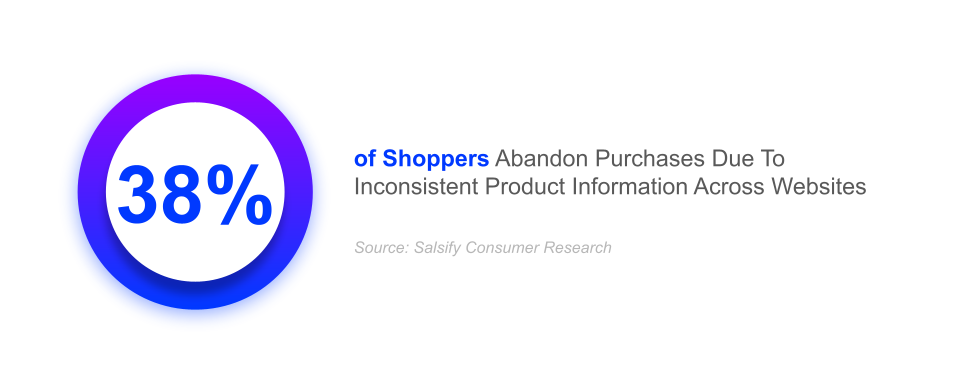
According to Salsify’s “2026 Consumer Research” report, 38% of shoppers abandon a sale due to inconsistent product information across different websites. Additionally, 45% of shoppers have returned an item in the last year that they purchased online due to incorrect product content, including up to 56% of millennials and 53% of Gen Zers.
 That balancing act is only getting more complicated as commerce expands beyond physical and digital shelves into increasingly agentic ones. AI-powered shopping tools also depend on accurate, structured product information to understand, surface, and recommend products, adding yet another place where inconsistent or incomplete content can tank your brand’s standing.
What Graza's Rise Can Teach Other CPG Brands
Graza’s success wasn’t the result of one clever bottle or a lucky viral moment. The pieces reinforced one another: a product experience that was easy to understand, packaging that worked equally well in kitchens and social feeds, and digital demand strong enough to help carry the brand into national retail.
For other CPG brands, the broader lesson is that even familiar products can feel new when they’re presented in a way that better fits how people actually use, discover, and talk about them.

2026 Holiday Pulse Report
Want to make a splash across physical, digital, and agentic shelves this holiday season? Explore insights on what holiday shoppers want from product experiences this year.
DOWNLOAD NOW.svg)
